






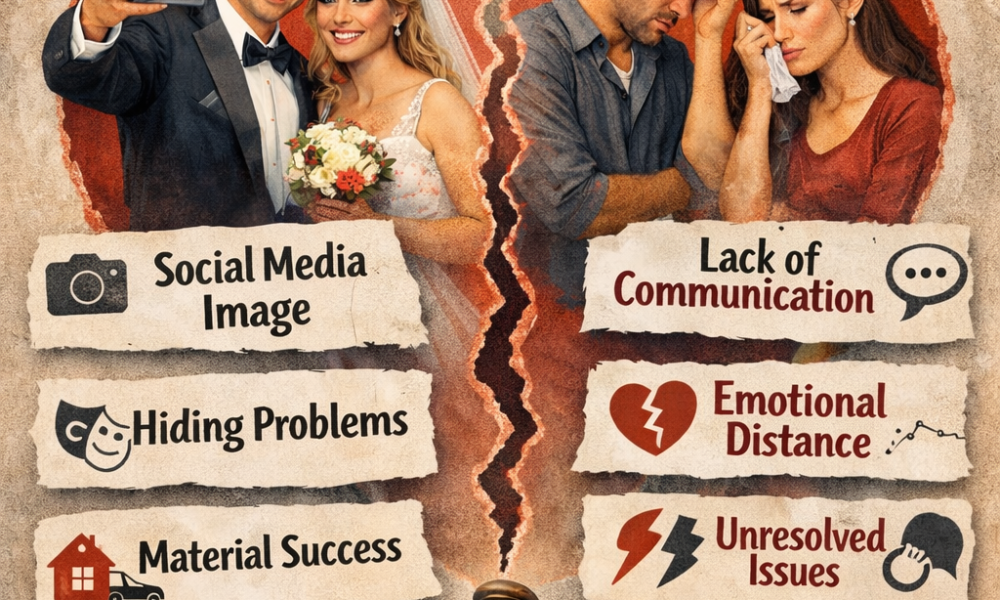

Why Some Marriages Look Perfect but Break Within Years

In the age of curated social media timelines, designer weddings, and carefully constructed family reputations, many marriages appear flawless from the outside. The couple looks happy. The families seem united. The photos radiate luxury, harmony, and prestige. Yet, within just a few years — sometimes even months — those “perfect” marriages collapse silently.
Why does this happen?
Why do unions that seemed destined for lifelong success unravel so quickly?
This is not merely a question of compatibility. It is a deeper exploration into psychology, family dynamics, ego, expectations, emotional maturity, and the dangerous illusion of perfection.
Let’s explore why some marriages look perfect — but break within years.
The Illusion of Perfection in Modern Marriage
In today’s urban society — especially in affluent areas like Gulshan and Banani — marriage is often treated as a statement. A declaration of status. A reflection of family prestige.
The wedding becomes a production. The couple becomes a brand. The narrative becomes scripted:
- Highly educated bride
- Successful groom
- Influential families
- Lavish ceremony
- Social approval
Everything checks out “on paper.”
But paper does not measure emotional maturity.
Paper does not measure unresolved trauma.
Paper does not measure ego battles.
Perfection is often staged — not lived.
- Marrying for Image, Not Compatibility
Many marriages begin with the wrong foundation. Families prioritize:
- Financial equality
- Social standing
- Academic background
- Family reputation
Compatibility becomes secondary.
The truth is simple but uncomfortable:
Two impressive individuals do not automatically create an emotionally healthy marriage.
In high-profile communities, couples sometimes feel pressure to maintain an image. Disagreements are hidden. Conflicts are suppressed. Emotional distance grows quietly.
By the time reality sets in, both individuals realize they married a profile — not a person.
- The Silent Ego War Between Families
One of the most underestimated reasons marriages break is the ongoing, silent competition between families.
In arranged settings — particularly within elite circles — there can be:
- Subtle power comparisons
- Financial competitiveness
- Social ranking insecurities
- Control over decisions
Initially, everything appears polite and respectful. But underneath, pride operates.
When two strong family systems collide, the couple often becomes collateral damage.
What begins as “small misunderstandings” becomes long-term resentment. Over time, pressure builds. The couple finds themselves constantly defending their spouse against their own parents.
No marriage survives long when loyalty is constantly tested.
- Emotional Immaturity Behind Professional Success
Professional success often disguises emotional immaturity.
A doctor, entrepreneur, banker, or corporate executive may excel in decision-making — but struggle with emotional communication.
Some common patterns:
- Inability to apologize
- Avoiding difficult conversations
- Defensiveness during conflict
- Silent treatment as punishment
On social media, the couple looks powerful. At home, they cannot discuss basic emotional needs.
Marriage requires emotional literacy — not just intelligence.
Without it, admiration turns into frustration.
- Unrealistic Expectations Fueled by Social Media
Platforms like Instagram and Facebook have reshaped how couples view marriage.
We constantly see:
- Anniversary surprises
- Exotic vacations
- Romantic gestures
- Perfect family portraits
What we do not see:
- Financial stress
- Communication breakdown
- In-law conflicts
- Emotional exhaustion
When couples measure their marriage against filtered realities, dissatisfaction increases.
Comparison kills gratitude.
Performance replaces authenticity.
Eventually, both partners feel they are living inside a stage — not a home.
- Lack of Pre-Marital Clarity
Many “perfect” marriages skip difficult but essential conversations:
- Financial expectations
- Living arrangements
- Career priorities
- Children planning
- Family boundaries
- Religious practices
Everything feels positive during proposal discussions. Nobody wants to “ruin” the mood by asking uncomfortable questions.
But unspoken expectations are ticking time bombs.
When reality unfolds — one partner feels betrayed, even though nothing was technically hidden.
Clarity before marriage prevents shock after marriage.
- The Pressure of Maintaining Reputation
In high-status communities, divorce is not just personal — it becomes social.
So couples stay silent.
They avoid counseling because “What will people say?”
They tolerate emotional neglect because “Our families will be embarrassed.”
They pretend everything is fine at events.
This suppression builds emotional distance.
By the time separation happens, it feels sudden to outsiders — but internally, the marriage ended long ago.
- Financial Compatibility Is Not Financial Equality
Two wealthy families do not guarantee shared money values.
Key hidden differences:
- One partner may be a spender, the other a saver
- One may value luxury, the other simplicity
- One may support extended family financially, the other may resist
Money is rarely the problem.
Attitudes toward money are.
When financial philosophy clashes, respect slowly erodes.
- Lack of Emotional Safety
A marriage can survive stress.
It cannot survive fear.
If one partner feels:
- Judged
- Criticized
- Controlled
- Compared
They begin to withdraw emotionally.
Emotional withdrawal is the beginning of the end.
Couples who look perfect often prioritize politeness over honesty. They avoid vulnerability because it feels risky.
But without emotional safety, intimacy dies.
- Rushing the Decision for Social Timing
In communities where “age” becomes a concern, decisions are rushed.
Families think:
- “This proposal looks ideal.”
- “Everything matches perfectly.”
- “We shouldn’t delay.”
But marriage is not a checklist.
Time spent understanding temperament, conflict style, and personal values is not delay — it is investment.
Fast decisions often create slow regrets.
- When Control Is Mistaken for Care
Sometimes one partner is dominant — financially or socially.
They make decisions. They lead. They “handle everything.”
Initially, it feels secure.
Later, it feels suffocating.
Marriage is partnership — not management.
When one voice dominates, the other slowly disappears. Resentment accumulates silently until it explodes.
- The Hidden Role of Unhealed Past Trauma
Some individuals enter marriage with unresolved emotional wounds:
- Past heartbreak
- Family dysfunction
- Childhood emotional neglect
- Trust issues
Without healing, marriage becomes the battlefield where old pain reappears.
The partner becomes the villain — when the real issue is internal.
Unhealed individuals cannot build stable unions.
- Performance-Based Love
Some marriages operate on conditional appreciation:
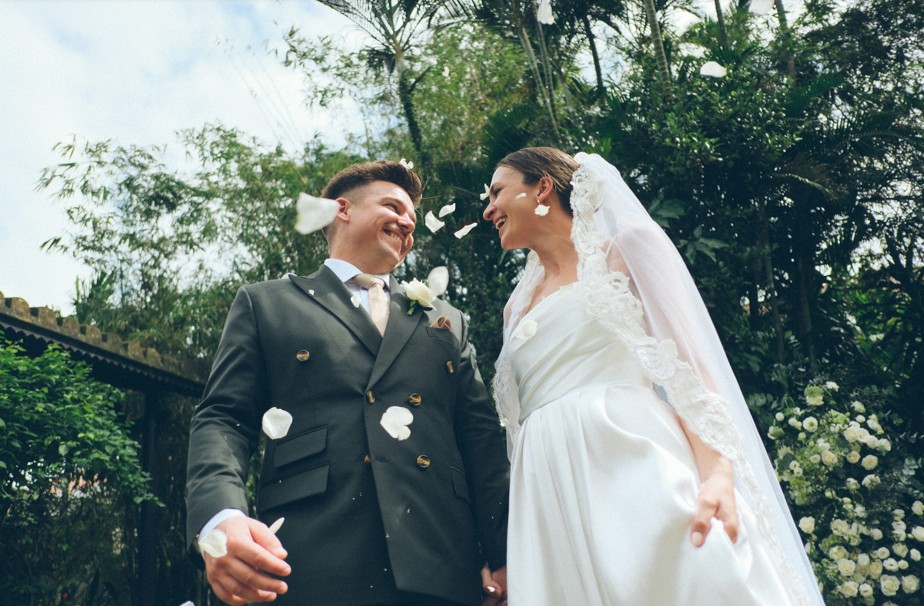
“I love you when you succeed.”
“I respect you when you impress others.”
“I admire you when you provide.”
This creates performance pressure.
When failure happens — job loss, business downturn, health crisis — the love feels unstable.
True marriage is built on identity acceptance, not performance validation.
- Absence of Conflict Resolution Skills
Conflict is normal.
Destructive conflict is deadly.
Common toxic patterns:
- Bringing up past mistakes
- Involving parents in every argument
- Threatening separation repeatedly
- Public humiliation
Couples who never learned healthy conflict resolution often confuse silence with peace.
But unresolved arguments accumulate emotional debt.
- Choosing Status Over Emotional Depth
In elite communities, prestige matters.
But prestige does not hug you when you are anxious.
Prestige does not comfort you during loneliness.
Prestige does not build intimacy.
When marriage is chosen primarily for social elevation, emotional connection becomes secondary.
And emotional starvation is slow — but fatal.
- Why “Perfect” Profiles Can Be Deceptive
At premium matchmaking platforms like Gulshan Marriage Media, one of the key roles is to look beyond surface perfection.
Because a perfect profile may hide:
- Inflated achievements
- Temperament issues
- Unrealistic expectations
- Family control dynamics
Professional screening helps identify red flags before they become lifetime problems.
Not all that shines is stability.
The Real Secret Behind Long-Lasting Marriages
Long-lasting marriages are rarely flashy.
They are built on:
- Emotional honesty
- Respectful communication
- Shared values
- Balanced power
- Family boundaries
- Mutual growth
They may not dominate social media feeds.
But they dominate resilience.
Why Some Marriages Look Perfect but Break Within Years
(Extended Deep Analysis – Part 2)
In the first part, we explored surface-level causes: ego, expectations, financial values, emotional immaturity, family pressure, and social image.
Now let’s go deeper.
Because when a marriage collapses within a few years, it is rarely because of one dramatic event. It is usually the result of small psychological fractures that quietly widen over time.
The outside world sees a sudden separation.
The couple experiences a slow emotional erosion.
Let’s examine the deeper layers that make “perfect” marriages fragile.
- The Problem of Marrying a Role Instead of a Human Being
In many elite settings — particularly in areas like Gulshan — individuals are often admired for the roles they play:
- “Successful businessman”
- “Educated abroad”
- “Doctor bride”
- “Influential family daughter”
- “Corporate leader son”
But marriage is not between titles.
It is between temperaments.
When two people marry because their roles align, but their personalities clash, the illusion fades quickly.
A dominant corporate leader may expect obedience at home.
A highly independent woman may reject traditional expectations.
Before marriage, these differences are admired.
After marriage, they become friction points.
Roles impress society.
Temperament determines harmony.
- The Emotional Gap That Slowly Grows
Many couples do not fight loudly.
They simply drift quietly.
At first, small differences seem manageable:
- Different communication styles
- Different stress responses
- Different love languages
But without conscious effort, these differences widen into emotional distance.
One partner may seek discussion.
The other may seek silence.
One may want reassurance.
The other may see it as unnecessary.
Over time, the relationship becomes functional instead of intimate.
They share a house.
They share responsibilities.
But they no longer share vulnerability.
And emotional loneliness inside marriage is heavier than being single.
- The Hidden Competition Between Husband and Wife
In high-achieving marriages, especially among urban professionals, competition can quietly replace partnership.
Who earns more?
Whose family is more influential?
Whose career matters more?
Who sacrifices more?
Instead of teamwork, the marriage becomes a scoreboard.
This dynamic is especially common when both partners are ambitious and socially respected.
Outsiders admire the “power couple.”
Inside, both may feel unappreciated.
Competition destroys collaboration.
Marriage requires alignment, not rivalry.
- Over-Involvement of Extended Family
In many South Asian contexts, marriage is not just between two individuals — it is between two families.
This can be beautiful.
But it can also be destructive.
Subtle interference may look like:
- Parents influencing financial decisions
- In-laws commenting on daily habits
- Siblings comparing lifestyles
- Family members taking sides in arguments
At first, the couple tolerates it to “maintain respect.”
Over time, the lack of boundaries becomes suffocating.
A healthy marriage requires a new primary loyalty — to the spouse.
When loyalty is divided, tension multiplies.
- The Fear of Honest Conversations
Many couples avoid difficult discussions because they fear conflict.
Topics that often remain untouched:
- Emotional dissatisfaction
- Sexual compatibility
- Mental health struggles
- Regret or doubt
- Feeling unappreciated
Instead of addressing concerns early, partners suppress them.
Suppression creates resentment.
Resentment creates emotional coldness.
Coldness creates detachment.
By the time they finally speak honestly, the damage feels irreversible.
- When Attraction Fades and Friendship Was Never Built
Some marriages begin with strong attraction and admiration.
But attraction alone cannot sustain years of partnership.
When stress enters — career pressure, children, financial adjustments — superficial chemistry weakens.
If the couple never built deep friendship, they struggle.
Friendship in marriage means:
- Laughing together
- Sharing fears
- Supporting growth
- Respecting individuality
Without friendship, romance cannot survive routine.
- The “Everything Is Fine” Syndrome
In communities where reputation matters deeply, couples often master the art of pretending.
At social gatherings, they appear united.
On anniversaries, they post smiling photos.
At family events, they sit together gracefully.
But behind closed doors:
- Communication is minimal
- Affection is absent
- Emotional trust is damaged
When image becomes more important than healing, problems intensify silently.
Outsiders are shocked by divorce announcements because they only saw performance — not reality.
- Financial Power Imbalance
Even when both families are financially strong, power imbalance can exist inside the marriage.
If one partner:
- Controls all expenses
- Monitors spending excessively
- Uses money to dominate decisions
It creates dependency and frustration.
Financial transparency builds trust.
Financial control builds insecurity.
Over time, the controlled partner may feel reduced — not respected.
- The Impact of Unmanaged Stress
High-profile careers often come with high stress.
Deadlines.
Competition.
Business risks.
Social expectations.
If stress is not managed individually, it spills into the marriage.
Small irritations become big arguments.
Tone becomes harsh.
Patience disappears.
A stressed mind cannot build a calm home.
Marriages that look glamorous externally often carry invisible exhaustion internally.
- Delayed Emotional Maturity
Some individuals marry because it is “time” — not because they are ready.
They may have:
- Never lived independently
- Never resolved personal insecurities
- Never learned emotional accountability
Marriage magnifies character.
Immaturity that was manageable while single becomes destructive in partnership.
Emotional maturity means:
- Taking responsibility
- Regulating emotions
- Accepting feedback
- Adjusting without ego
Without these skills, even the most compatible match struggles.
- When Expectations Were Never Negotiated
Many couples assume understanding instead of clarifying it.
For example:
One partner assumes the wife will leave her career.
The other assumes career continuation is obvious.
One assumes living with parents permanently.
The other assumes independence after a few years.
These assumptions create shock.
And shock creates bitterness.
Expectation without discussion is a silent trap.
- The Social Comparison Trap
Modern couples constantly compare themselves.
Vacations.
Cars.
Houses.
Anniversary gifts.
Social media platforms amplify dissatisfaction.
Even stable marriages begin to feel “less than.”
Comparison shifts focus from gratitude to deficiency.
Gratitude strengthens relationships.
Comparison weakens them.
- Avoiding Professional Guidance
In many communities, seeking counseling is seen as weakness.
But refusing guidance during conflict allows small issues to escalate.
Early intervention often prevents breakdown.
Waiting until emotional damage is severe reduces recovery chances.
Strong couples seek support when needed.
Fragile couples protect ego instead.
- The Myth That Love Alone Is Enough
Love is essential.
But love without structure fails.
A sustainable marriage requires:
- Shared vision
- Agreed boundaries
- Financial planning
- Family alignment
- Emotional intelligence
When couples rely only on feeling — without foundation — stability weakens.
Love starts marriages.
Structure sustains them.
- The Slow Death of Respect
The final stage of marital breakdown is not anger.
It is indifference.
When partners:
- Stop valuing opinions
- Stop caring about emotional pain
- Stop trying to understand
- Stop fighting for connection
The relationship quietly ends.
Respect is the backbone of longevity.
Without respect, affection fades.
A Deeper Truth: Stability Is Built Intentionally
Marriages that last are not accidently stable.
They are intentionally nurtured.
They involve:
- Difficult conversations before crisis
- Honest self-reflection
- Clear boundaries with families
- Mutual emotional growth
- Shared responsibility
They are less flashy.
Less dramatic.
Less performative.
But they are deeply secure.
Why Professional Screening Matters

Premium platforms such as Gulshan Marriage Media understand one crucial truth:
Compatibility is multi-layered.
Beyond education and wealth, serious evaluation includes:
- Family dynamics
- Emotional temperament
- Expectation alignment
- Lifestyle preferences
- Decision-making style
When screening focuses only on prestige, marriages look perfect — but crack under pressure.
When screening focuses on psychological alignment, marriages endure.
Final Reflection: The Difference Between Image and Integrity
A perfect-looking marriage is easy to create.
A peaceful marriage is hard to build.
Image impresses people.
Integrity sustains partnership.
Before saying yes to a proposal that seems flawless, ask deeper questions:
- Do we resolve conflict respectfully?
- Are we emotionally safe with each other?
- Do our values truly align?
- Can we grow together — not just look good together?
Because the goal is not a beautiful wedding.
It is a stable life.
And the marriages that survive decades are rarely the loudest.
They are the ones where two people choose each other — honestly, consistently, and humbly — long after the applause fades.
Final Reflection: Perfection Is a Performance, Stability Is a Practice
Some marriages look perfect because they are curated.
Others last because they are cultivated.
There is a difference.
If you are choosing marriage — whether independently or through a professional platform — remember:
Compatibility is deeper than status.
Character is stronger than charm.
Emotional safety is more valuable than image.
A marriage should feel peaceful — not impressive.
And when you prioritize emotional alignment over external perfection, you don’t just create a wedding.
You create a future.

Other Articles

How Elite Neighborhood Culture Shapes Marriage Decisions
Marriage Is a Lifetime Decision — Choose the Right Platform