






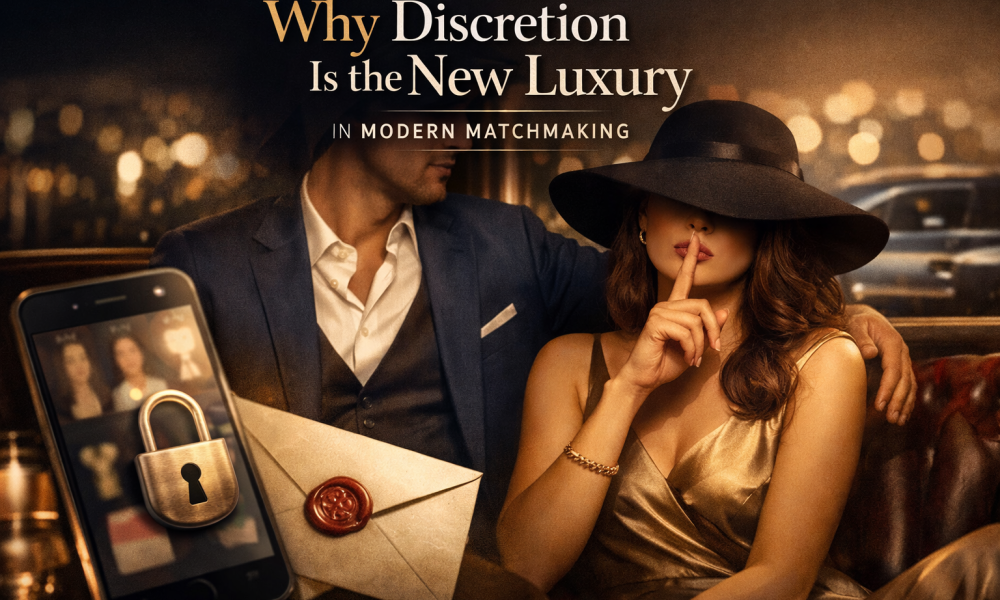

Why Discretion Is the New Luxury in Modern Matchmaking
In a world where everything is loud, public, and constantly on display, silence has quietly become priceless.
We live in an age where people announce engagements on social media before families are informed, where personal preferences are turned into swipeable cards, and where intimate decisions are reduced to algorithms. Matchmaking, once a deeply private and family-driven process, has become increasingly exposed, transactional, and rushed.
And yet, among a growing segment of thoughtful, successful, and emotionally aware individuals, a counter-movement is emerging.
They are choosing discretion.
Not because they have something to hide—but because they have something to protect.
In modern matchmaking, discretion is no longer just a preference.
It is a luxury.
And for many, it has become a non-negotiable.
From Public Choices to Private Decisions
There was a time when marriage decisions unfolded quietly. Families spoke behind closed doors. Elders exchanged information carefully. Conversations were slow, deliberate, and often deeply respectful of personal boundaries.
Fast forward to today.
Profiles are uploaded publicly. Photos circulate freely. Screenshots travel faster than truth. A single conversation can be misinterpreted, shared, or judged by people who were never meant to be part of the story.
The shift from private negotiation to public exposure didn’t happen overnight. It arrived disguised as convenience.
Apps promised speed. Platforms promised reach. Visibility was sold as empowerment.
But something crucial was lost in the process.
Privacy.
Why Visibility Isn’t Always Power
Modern culture often equates visibility with value. The more seen you are, the more “relevant” you seem. This logic may work for brands and influencers—but marriage is not a marketing campaign.
For individuals who value dignity, reputation, and emotional safety, being visible to everyone feels less like opportunity and more like vulnerability.
A marriage decision is not just about finding a partner.
It’s about aligning families, values, lifestyles, expectations, and futures.
When these deeply personal considerations are exposed too early or too widely, the cost can be high:
- Misunderstandings multiply
- Rumors replace facts
- Pressure replaces patience
- And choices become performances instead of reflections
Discretion acts as a filter. It slows things down. It creates space for sincerity.
The Silent Fear No One Talks About
Behind many polished profiles lies a quiet fear:
“What if the wrong people see this?”
This fear is not insecurity. It is awareness.
Professionals worry about colleagues discovering their personal searches. Families worry about reputation. Divorced individuals worry about being judged before being understood. Parents worry about daughters being discussed casually. Sons worry about being evaluated superficially.
These concerns are rarely spoken out loud—but they shape decisions more than people admit.
In this emotional landscape, discretion becomes safety.
Luxury Has Changed Meaning
Luxury used to mean excess. Bigger houses. Louder weddings. Grander gestures.
But modern luxury has evolved.
Today, luxury means:
- Control over your narrative
- Protection of your identity
- Time to decide without pressure
- Conversations that don’t leak
- Choices that aren’t rushed by algorithms
In matchmaking, luxury is not about how many options you see—it’s about how carefully the right option is introduced.
Why High-Value Individuals Choose Quiet Paths
Those who have worked hard to build careers, credibility, and stable lives often become more selective—not just in partners, but in process.
They understand that:
- Not everyone needs access to their personal life
- Not every proposal deserves attention
- Not every “match” is safe or sincere
They don’t want hundreds of options.
They want one meaningful alignment.
Discretion allows that focus.
It ensures conversations happen with intention, not noise.
The Problem with Overexposure
When matchmaking becomes public, three things often suffer:
- Emotional Honesty
People perform. They present ideal versions of themselves. Real conversations are delayed.
- Family Comfort
Parents hesitate when information spreads too fast. Trust erodes before bonds are built.
- Decision Quality
Too many eyes create pressure. Choices become reactive instead of reflective.
Discretion restores balance. It brings conversations back to their rightful place—between the people who matter.
Discretion Builds Trust Before Attraction
Attraction is immediate.
Trust is gradual.
Public platforms often reverse this order. Faces are shown before values. Images before intentions. Likes before conversations.
Discreet matchmaking flips the script.
It prioritizes:
- Intent before appearance
- Compatibility before chemistry
- Safety before speed
This doesn’t reduce romance—it deepens it.
Because when trust is established quietly, attraction feels grounded, not rushed.
Families Feel Safer in Quiet Processes
Marriage is rarely an individual decision alone—especially in societies where families remain emotionally involved.
Discreet matchmaking allows families to:
- Ask questions without embarrassment
- Explore compatibility without exposure
- Decline proposals without social fallout
This sense of safety changes everything.
When families feel respected, decisions become calmer, wiser, and less defensive.
Why Algorithms Can’t Replace Human Judgment
Technology is efficient—but marriage is not a data problem.
Algorithms can match age, education, and location.
They cannot read hesitation in a voice.
They cannot sense unspoken discomfort.
They cannot understand family dynamics.
Discreet, human-led matchmaking thrives because it notices what systems miss.
It protects individuals from being reduced to filters and statistics.
And that protection is deeply valuable.
The Emotional Cost of Being “Just Another Profile”
Many people don’t realize how exhausting public matchmaking can be until they experience it.
Constant evaluation.
Endless introductions.
Silent rejections.
Performative conversations.
Over time, this erodes self-worth.
Discretion removes that emotional noise. It restores dignity to the process.
You are not “one of many.”
You are carefully considered.
Why Silence Often Means Seriousness
In modern matchmaking, loud interest often signals curiosity.
Quiet interest often signals intention.
Discretion attracts people who are:
- Serious about commitment
- Respectful of boundaries
- Clear about readiness
It naturally filters out those seeking entertainment, validation, or casual engagement.
And that filtering saves time, energy, and emotional health.
Privacy Protects Women in Unique Ways
For women especially, discretion is not just comfort—it is protection.
Public platforms expose women to:
- Unsolicited judgments
- Invasive questions
- Pressure to “prove worth”
A discreet process allows women to:
- Speak freely
- Set boundaries early
- Be evaluated respectfully
Luxury matchmaking understands that privacy empowers—not restricts.
Second Chances Require Even More Discretion
For individuals entering marriage again, discretion becomes essential.
Past experiences carry sensitivity.
Children may be involved.
Families may be cautious.
Public exposure can reopen wounds.
Quiet processes allow healing to continue—not be interrupted.
The Confidence of Not Needing Attention
There is a quiet confidence in choosing discretion.
It says:
“I don’t need validation.”
“I value quality over quantity.”
“I am intentional about my future.”
This confidence attracts the same energy in return.
Because the right partner doesn’t need to see everything at once—they need to see enough, at the right time.
Why Discretion Leads to Better Outcomes
When people feel safe:
- They communicate honestly
- They listen more
- They rush less
- They choose wisely
Discretion doesn’t slow love—it protects it while it grows.
Modern Matchmaking Is Not About Speed
Speed feels productive—but marriage rewards patience.
Discreet matchmaking creates space for:
- Reflection
- Family discussion
- Emotional clarity
And that space often makes the difference between a rushed decision and a lasting one.
The Future of Matchmaking Is Quiet, Not Loud
As more people experience the burnout of overexposed platforms, the value of discretion will only rise.
The future belongs to systems that:
- Respect privacy
- Prioritize trust
- Value human judgment
- Understand cultural nuance
Luxury will not be defined by how many profiles you see—but by how carefully the right one is presented.
Final Thoughts: Choosing Silence in a Noisy World
In a culture obsessed with sharing, choosing discretion is an act of self-respect.
It is a decision to protect your story until it is ready to be shared.
To value depth over display.
To choose intention over impulse.
Modern matchmaking doesn’t need to be public to be powerful.
Sometimes, the most meaningful journeys begin quietly—away from noise, away from pressure, and close to what truly matters.
And that quiet, today, is the rarest luxury of all.
When Too Much Access Destroys Mystery
One of the quiet casualties of modern matchmaking is mystery.
Everything is available too soon—photos, opinions, habits, even past relationships. Before two people have the chance to sit across from each other and discover layers slowly, they already feel overexposed.
Mystery is not manipulation.
It is pacing.
Discretion preserves the natural rhythm of getting to know someone. It allows curiosity to grow without pressure. It keeps the process human instead of transactional.
When everything is revealed too early, people don’t feel excited—they feel overwhelmed.
Luxury matchmaking understands this psychology. It reveals enough, not everything.
Why Noise Creates False Negatives
In public matchmaking environments, many good matches fail—not because they are wrong, but because they are evaluated under noise.
- Too many opinions
- Too many comparisons
- Too many “what ifs”
Someone is rejected not for who they are, but because:
- Another profile looked more impressive
- A relative made an offhand comment
- A photo didn’t “feel right”
Discretion removes this noise. It gives each proposal the dignity of focus.
When people are evaluated quietly, they are seen more clearly.
The Psychological Safety of Not Being Watched
People behave differently when they feel watched.
They edit themselves.
They hold back doubts.
They rush to impress.
In discreet environments, the nervous system relaxes.
People ask better questions.
They admit fears.
They speak about finances, expectations, past experiences—honestly.
This emotional safety is invisible but powerful.
And it is impossible to create in public, swipe-based ecosystems.
Why the Wealthiest Societies Value Silence
Look closely at cultures where privacy is deeply respected—old European families, East Asian elites, Middle Eastern high-net-worth circles.
Marriage discussions are:
- Slow
- Closed-door
- Mediated by trusted intermediaries
Why?
Because families who understand legacy understand risk.
They know that exposure creates vulnerability—not just emotionally, but socially and professionally.
Discretion is not about secrecy.
It is about control.
Status Doesn’t Need Advertisement
One of the most misunderstood ideas in modern matchmaking is the need to “show worth.”
Education listed boldly.
Income highlighted.
Lifestyle displayed.
But real status does not announce itself.
In fact, those who truly possess stability—emotional, financial, social—often prefer not to display it openly.
Discreet matchmaking allows worth to be understood, not advertised.
And that difference matters.
Why Public Platforms Reward the Wrong Traits
Public matchmaking ecosystems often reward:
- Confidence over character
- Presentation over patience
- Speed over sincerity
Those who are loud, charming, and persuasive rise quickly.
Those who are thoughtful, reserved, emotionally deep often get overlooked.
Discretion flips this hierarchy.
It gives space to people who:
- Think before speaking
- Value commitment deeply
- Take time to trust
These are the people who make stable marriages—but they are rarely optimized for noise.
The Invisible Labor of Emotional Screening
One of the greatest luxuries in discreet matchmaking is something people rarely see:
Emotional screening.
Not just:
- Age
- Profession
- Education
But:
- Readiness
- Communication patterns
- Emotional availability
- Family dynamics
- Conflict style
Public platforms cannot do this work.
It requires listening.
It requires experience.
It requires discretion.
And it protects people from entering conversations that were never aligned to begin with.
Why Rejection Feels Kinder in Private
Rejection is part of matchmaking—but how it happens matters.
Public rejection feels personal, embarrassing, and often humiliating.
Silence, ghosting, unexplained disinterest—these damage self-worth.
Discreet processes allow rejection to be:
- Respectful
- Quiet
- Contextual
People walk away with dignity intact.
That alone is a form of luxury.
Parents Trust Silence More Than Promises
Families may not always understand technology—but they understand discretion.
They trust systems where:
- Information is controlled
- Conversations are guided
- Boundaries are respected
Parents worry less.
Questions are asked calmly.
Decisions feel thoughtful, not forced.
This trust becomes the foundation for smoother engagements and healthier marriages.
Why Discretion Protects Men Too
Privacy is often discussed in the context of women—but men benefit deeply from discretion as well.
Men face:
- Unrealistic expectations
- Financial assumptions
- Status pressure
Public platforms reduce men to checklists:
Salary. Height. Degree.
Discreet matchmaking allows men to be understood holistically:
Values. Responsibility. Emotional maturity.
This balance leads to more genuine connections.
The Cost of Being Misunderstood Publicly
Once a public perception is formed, correcting it is almost impossible.
A misunderstood comment.
A misread preference.
A rumor.
Discretion prevents narratives from forming prematurely.
It ensures people are understood before being judged.
And that protection is priceless.
Why Privacy Allows Slow Love
Not all love is instant.
Some connections need time to:
- Build trust
- Understand families
- Align expectations
Public environments push urgency.
Discreet ones allow patience.
Slow love often becomes strong love.
The Quiet Confidence of Saying “No”
Discretion empowers people to say no—without guilt.
No to pressure.
No to timelines imposed by outsiders.
No to matches that look good but feel wrong.
This agency is essential for healthy marriage decisions.
Why Modern Burnout Is Pushing People Back to Privacy
After months—or years—of public platforms, many people feel emotionally exhausted.
They are tired of:
- Endless conversations
- Repeating their story
- Being evaluated constantly
Discreet matchmaking feels like relief.
Fewer conversations.
Better alignment.
Less emotional waste.
Marriage Is Not a Numbers Game
The biggest myth modern platforms sell is abundance.
More options ≠ better decisions.
Often, more options create paralysis.
Discretion reduces options intentionally.
And in doing so, increases clarity.
Why Silence Signals Seriousness to the Right People
Those who value discretion recognize it instantly.
They understand that:
- Serious decisions don’t need audiences
- Real intentions don’t seek validation
This mutual understanding creates alignment before attraction even begins.
Luxury Is Being Treated as a Human, Not a Profile
At its core, discretion restores humanity to matchmaking.
You are not:
- A product
- A dataset
- A swipe
You are a person with history, family, fears, and hopes.
Being treated accordingly is the highest form of respect.
The New Definition of Premium Matchmaking
Premium is not:
- Flashy websites
- Endless profiles
- Loud marketing
Premium is:
- Thoughtful curation
- Emotional intelligence
- Privacy-first processes
- Human judgment
- Cultural understanding
Discretion ties all of this together.
Choosing Quiet Is Choosing Power
In a world that pushes exposure, choosing discretion is an act of power.
It means:
- You control access
- You value depth
- You choose intentionally
This mindset changes outcomes.
Final Reflection: Love Grows Best Where It Is Protected
Discretion
Love is fragile in its early stages.
It needs space.
It needs safety.
It needs patience.
Discretion provides all three.
That is why, in modern matchmaking, discretion is no longer optional.
It is the new luxury.
And for those who understand its value, there is no going back.
In the end, discretion is not about secrecy or exclusivity for its own sake. It is about respecting the weight of the decision. Marriage is one of the few choices that reshapes an entire life—socially, emotionally, and generationally. Treating such a decision casually, publicly, or hurriedly diminishes its seriousness.
Discretion creates a protected space where intentions can be examined honestly, not performed. It allows people to arrive at clarity without an audience, to ask difficult questions without fear of judgment, and to walk away when something feels wrong without public explanation. This freedom is rare in modern life—and deeply valuable.
As matchmaking evolves, the most trusted systems will not be the loudest or the fastest. They will be the ones that understand human vulnerability, cultural nuance, and emotional timing. They will recognize that true compatibility often unfolds slowly, in conversations that are never meant to be shared widely.

Other Articles