






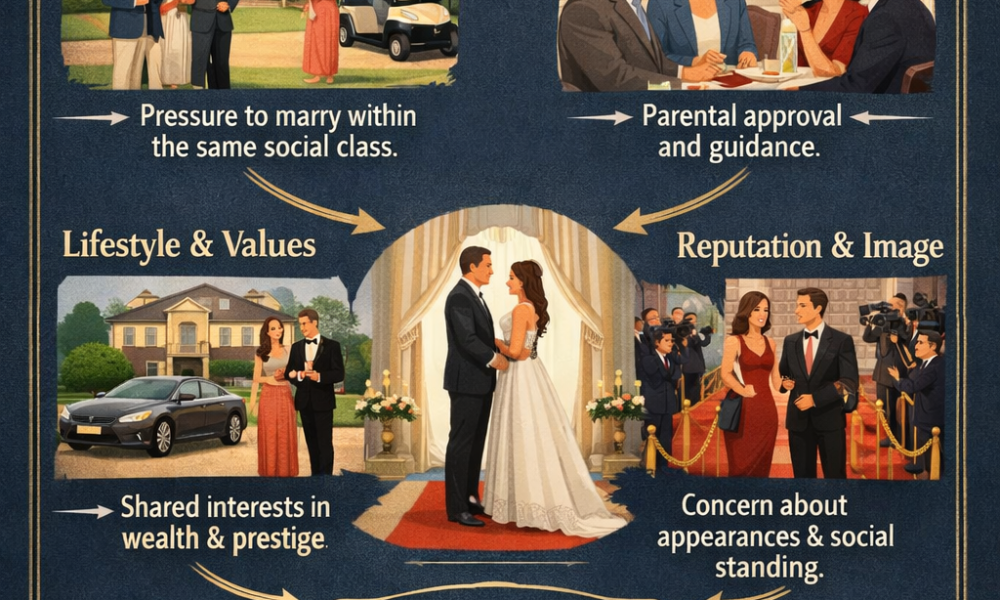

How Elite Neighborhood Culture Shapes Marriage Decisions

In cities like Dhaka, where neighborhoods silently define social identity, marriage is rarely just about two individuals. It is about families, legacy, education, financial standing, networks, and reputation. In elite residential zones such as Gulshan, Banani, Baridhara, and Dhanmondi, marriage decisions are deeply shaped by neighborhood culture.
These areas are not just locations on a map. They are ecosystems of influence. They create standards, expectations, competition, and silent rules that families rarely discuss openly but strictly follow behind closed doors.
This article explores how elite neighborhood culture subtly — and sometimes aggressively — shapes marriage decisions, expectations, negotiations, and final outcomes.
- The Identity of an Address: More Than Just a Location
In elite areas, your address speaks before you do.
When someone says, “They live in Gulshan,” it immediately communicates assumptions about:
- Income level
- Education standards
- Social circle
- Lifestyle habits
- Exposure to global culture
Similarly, living in Banani or Baridhara suggests a certain class positioning. In marriage discussions, these perceptions influence expectations long before the bride and groom meet.
Families often unconsciously filter proposals based on:
- Whether the other family “matches” their neighborhood status
- Whether the lifestyle gap would create adjustment issues
- Whether social reputation aligns
An address becomes a social filter.
- The Culture of Comparison
Elite neighborhoods create a culture of silent comparison.
Parents compare:
- Educational institutions attended
- Foreign degrees
- Property size
- Business scale
- Social connections
- Wedding budgets
In affluent areas, marriage becomes a reflection of family branding.
If one family’s daughter marries into a well-known business family, neighboring families feel subtle pressure to secure a “comparable” alliance.
Marriage becomes less about emotional compatibility and more about maintaining neighborhood parity.
- Reputation Management: The Invisible Pressure
In upper-tier residential zones, reputation travels fast. Social circles overlap.
Families attend the same:
- Community events
- Clubs
- Charity functions
- Business gatherings
- Mosque committees
- Private school networks
If a marriage proposal collapses due to disagreement, news often spreads informally.
This leads families to:
- Avoid risky alliances
- Prioritize “safe” matches
- Conduct extensive background checks
- Maintain discretion
The fear of social embarrassment often shapes final decisions.
- Education as a Status Benchmark
Elite neighborhoods often prioritize education at a global standard.
Parents expect:
- Degrees from reputed private universities
- International exposure
- Fluent English communication
- Professional stability
In areas like Gulshan and Baridhara, many families have children educated abroad. Therefore, marriage expectations rise accordingly.
A mismatch in educational background can become a deal-breaker — not necessarily because of incompatibility, but because of perceived imbalance.
- The Lifestyle Factor
Elite neighborhoods cultivate a specific lifestyle:
- International travel
- Dining in premium restaurants
- Membership in private clubs
- Luxury vehicles
- Destination weddings
Marriage decisions are evaluated through the lens of lifestyle sustainability.
Families ask:
- Can the groom maintain this standard?
- Can the bride adapt to this environment?
- Will there be financial strain?
Adjustment concerns often outweigh emotional connection.
- Financial Transparency and Power Dynamics
In affluent neighborhoods, financial discussions are more direct — but also more strategic.
Families evaluate:
- Business stability
- Asset ownership
- Property inheritance
- Family wealth history
In some cases, wealth becomes a tool of power during negotiations.
When one side significantly outweighs the other financially, it may create imbalance in decision-making power within the marriage.
Elite culture often seeks parity — not just prosperity.
- Social Network Compatibility
Marriage in elite zones is not only about two families — it is about network merging.
Questions families consider:
- Will their social circles blend smoothly?
- Are reputations compatible?
- Are there shared acquaintances?
A marriage can strengthen business alliances or social positioning.
Thus, proposals are evaluated strategically.
- The Rise of Confidential Matchmaking
Because privacy is crucial in elite communities, many families avoid open matrimony platforms.
They prefer:
- Confidential screening
- Selective introductions
- Invitation-only networks
- Verified biodata exchanges
The culture of discretion is deeply tied to neighborhood identity.
Families want control over:
- Who knows they are searching
- Who sees their daughter’s profile
- Who has access to personal details
In elite areas, privacy equals prestige.
- Delayed Marriages in Elite Zones
Interestingly, affluent neighborhoods often see delayed marriage patterns.
Reasons include:
- Career prioritization
- Overseas education
- High expectations
- Fear of mismatched status
- Desire for “perfect” alignment
Elite culture promotes excellence — but that same pursuit of perfection can delay commitment.
- Gender Expectations in Affluent Families
Elite neighborhoods have complex gender expectations.
For daughters:
- Education is valued
- Career is encouraged
- But family reputation must remain protected
For sons:
- Financial leadership is expected
- Emotional maturity is assumed
- Stability is non-negotiable
These layered expectations influence decision speed and proposal acceptance.
- Wedding as Social Performance
In upscale neighborhoods, weddings are highly visible social events.
They reflect:
- Financial capacity
- Social standing
- Family taste
- Network strength
Sometimes families approve or reject proposals based on whether the union can “represent” them well publicly.
Marriage becomes part of a long-term social image strategy.
- The Silent Fear of “Downgrading”
One unspoken factor in elite culture is the fear of status downgrade.
Families worry:
- Will their daughter adjust to a smaller lifestyle?
- Will their son’s wife adapt to elite expectations?
- Will social perception decline?
This fear drives many rejections — even when emotional compatibility exists.
- Children Raised in Elite Environments
Children raised in Gulshan or Banani often grow up with:
- Exposure to global culture
- High academic pressure
- Competitive peer groups
Their expectations in marriage reflect the environment they were shaped by.
They may seek:
- Intellectual compatibility
- Similar travel exposure
- Cultural fluency
- Ambition parity
Elite neighborhood culture shapes mindset long before marriage conversations begin.
- The Business Alliance Element
In some cases, marriage serves as:
- A bridge between businesses
- A strengthening of political connections
- A consolidation of assets
While not openly stated, strategic alignment sometimes plays a role.
Elite culture is intertwined with influence.
- Emotional Compatibility vs Social Approval
One of the biggest dilemmas in elite communities is balancing:
- Personal emotional connection
- Family social expectations
Often, social approval carries more weight.
Young adults sometimes feel torn between:
- Love
- Logic
- Family prestige
This internal conflict is common but rarely discussed publicly.
- The Impact of Expat Culture
Baridhara and Gulshan house many expatriate families and diplomats.
Exposure to international values influences:
- Marriage age
- Gender roles
- Pre-marital communication
- Expectation of independence
Elite neighborhoods are culturally hybrid.
This hybridity reshapes traditional marriage patterns.
- Divorce Sensitivity in Elite Circles
In tightly connected neighborhoods, divorce carries amplified visibility.
Families therefore:
- Over-analyze compatibility
- Conduct deeper background research
- Avoid uncertain alliances
Fear of public failure influences cautious decision-making.
- The Psychology of “Matching Standards”
Elite families subconsciously evaluate:
- Confidence levels
- Grooming standards
- Communication style
- Cultural sophistication
A slight mismatch in etiquette or presentation can influence perception.
In these circles, presentation equals preparedness.
- Technology and Surveillance Culture
Digital footprints matter more in affluent communities.
Families investigate:
- Social media behavior
- Online reputation
- Business presence
- Public controversies
Marriage decisions now involve digital audits.
- The Role of Trusted Intermediaries
Because elite circles value reputation protection, trusted intermediaries become critical.
These intermediaries:
- Filter unsuitable matches
- Verify claims
- Maintain confidentiality
- Reduce social risk
Elite culture thrives on controlled introductions.
- Emotional Consequences of Elite Pressure
Behind luxury and status, there is often emotional pressure:
- Fear of disappointing parents
- Anxiety over meeting expectations
- Comparison with peers
- Pressure to secure “high-value” alliances
Many young adults in affluent areas feel the weight of invisible standards.
- Is Elite Culture Good or Harmful?
Elite neighborhood culture has strengths:
- Emphasis on education
- Stability focus
- Background verification
- Strategic thinking
But it also has risks:
- Excessive comparison
- Perfectionism
- Delayed commitment
- Emotional suppression
Balance is essential.
- The Future of Marriage in Elite Dhaka
As younger generations gain independence, patterns are shifting:
- Greater emphasis on compatibility
- More private decision-making
- Less rigid status obsession
- Increased cross-cultural marriages
However, neighborhood culture still plays a powerful background role.
The Address Shapes the Alliance
In elite neighborhoods like Gulshan, Banani, Baridhara, and Dhanmondi, marriage decisions are never isolated from environment.
The culture of comparison, privacy, prestige, and parity influences:
- Proposal acceptance
- Negotiation tone
- Timeline
- Emotional freedom
An address shapes identity. Identity shapes expectations. Expectations shape marriage.
Understanding this ecosystem is essential for families navigating elite marriage circles.
Because in these neighborhoods, marriage is not just about two hearts — it is about two reputations, two networks, and two legacies merging into one future.
How Elite Neighborhood Culture Shapes Marriage Decisions

Elite neighborhood culture does not just influence marriage decisions at a surface level. It shapes psychology, negotiation patterns, emotional expectations, generational dynamics, and even the timing of commitment. In prestigious urban areas like Gulshan, Banani, Baridhara, and Dhanmondi, the social ecosystem operates almost like a quiet institution — teaching people what is acceptable, what is impressive, and what is considered “below standard.”
Let’s go deeper into the unseen layers that influence marriage outcomes in these communities.
- The Subtle Power of Environment Conditioning
Children raised in elite neighborhoods are conditioned by their surroundings long before they understand marriage.
They grow up seeing:
- Luxury cars parked in driveways
- International schools as the norm
- Destination vacations as routine
- High-profile social gatherings
This conditioning builds an internal “baseline” for what feels normal.
When marriage discussions begin, individuals subconsciously look for someone who fits that baseline. It is rarely about arrogance. It is about familiarity.
If a proposal comes from a drastically different socioeconomic environment, concerns arise:
- Will adjustment feel like sacrifice?
- Will social comfort change?
- Will lifestyle expectations clash?
Neighborhood culture silently sets emotional comfort zones.
- The Economics of Marriage Alliances
Elite areas often host business owners, corporate executives, diplomats, doctors, and entrepreneurs. In such circles, marriage is sometimes viewed as long-term economic stability.
Families evaluate:
- Business expansion possibilities
- Investment compatibility
- Asset consolidation
- Long-term wealth preservation
This does not mean love is ignored. But financial sustainability is rarely separated from emotional commitment.
In affluent neighborhoods, marriage is viewed as:
A lifetime partnership emotionally — and a strategic alignment practically.
- The Role of Property Ownership
In elite communities, property ownership is a major indicator of status.
Owning:
- Apartments in prime zones
- Commercial property
- Land in growing sectors
… adds weight to marriage negotiations.
Families often ask:
- Is the property self-earned or inherited?
- Are there financial liabilities?
- Is there ownership transparency?
In neighborhoods where real estate value defines prestige, property becomes part of marital evaluation.
- The Psychology of “Equal Standing”
Elite families often seek “equal standing” alliances.
Not necessarily identical wealth — but similar exposure, ambition, and confidence.
Why?
Because imbalance can create:
- Decision-making conflict
- Social discomfort
- Hidden resentment
- Power struggles
When both sides feel socially secure, marriage stability increases.
Elite culture prioritizes parity to reduce long-term tension.
- The Influence of Peer Marriages
In elite neighborhoods, peer marriages heavily influence expectations.
When:
- A friend marries a UK-educated entrepreneur
- A cousin marries into a renowned business family
- A neighbor’s wedding becomes a social event of the year
Expectations naturally escalate.
Young adults start thinking:
“If they found someone like that, why shouldn’t I?”
Comparison raises standards — sometimes unrealistically.
- Privacy as Prestige
In affluent areas, privacy is considered a form of wealth.
Families prefer:
- Controlled proposal sharing
- Limited biodata circulation
- Private meetings
- Discreet negotiations
Publicly announcing “searching for groom” can feel socially uncomfortable in elite zones.
Thus, many families rely on selective, confidential channels rather than open platforms.
Privacy becomes a sign of refinement.
- The Fear of Social Misalignment
Social alignment is deeply important in elite circles.
Families assess:
- Conversation style
- Table manners
- Dress sense
- Confidence levels
- Cultural exposure
Even subtle differences can feel magnified.
A family may reject a proposal not because of incompatibility — but because they sense social awkwardness during meetings.
Elite culture places high value on polished interaction.
- Marriage as Continuity of Brand
In prestigious neighborhoods, families often have established reputations built over decades.
Marriage decisions are seen as:
An extension of that legacy.
Parents ask:
- Will this alliance strengthen our image?
- Will it maintain our standing?
- Will our grandchildren grow up in similar cultural standards?
Marriage becomes long-term brand preservation.
- Gender Roles in Modern Elite Circles
Elite neighborhoods are experiencing a transformation in gender dynamics.
Many daughters are:
- Highly educated
- Financially independent
- Career-focused
- Globally exposed
However, expectations remain layered.
Families want:
- Independence but family orientation
- Career ambition but flexibility
- Confidence but humility
Balancing modern and traditional expectations becomes complex.
- The Delayed Commitment Phenomenon
Affluent individuals often delay marriage for:
- Career establishment
- Business expansion
- Postgraduate education
- International exposure
The result?
Marriage age shifts upward.
However, higher age also increases expectations.
Older individuals may become more selective, analytical, and cautious.
Elite culture promotes excellence — but perfectionism can delay union.
- Emotional Guardedness in Elite Families
In elite circles, emotional expression during marriage talks is often restrained.
Meetings feel:
- Formal
- Structured
- Controlled
Families avoid:
- Excessive emotional display
- Over-sharing
- Immediate commitment
This emotional guardedness protects reputation — but can sometimes delay genuine connection.
- Influence of Global Exposure
Families in Gulshan and Baridhara often have members living abroad.
Exposure to:
- Western independence values
- Individual choice priorities
- Equal partnership models
… influences marriage decisions.
Young adults may want:
- Longer pre-marital conversations
- Emotional compatibility validation
- Personal comfort before final approval
Elite culture is increasingly blending tradition with global thinking.
- The Role of Social Clubs and Networks
Elite neighborhoods have interconnected networks through:
- Private clubs
- Business forums
- Alumni associations
- Religious committees
- Charity boards
These networks often act as informal verification systems.
A simple phone call within the circle can validate or question a proposal.
Network trust heavily influences acceptance.
- The Pressure of High Expectations
High expectations create invisible pressure.
Young individuals may feel:
- Fear of disappointing parents
- Fear of choosing “wrong”
- Fear of not matching peer success
This pressure can create decision paralysis.
Sometimes good matches are delayed due to overthinking.
- The Silent Competition Between Families
Elite neighborhoods encourage silent competition.
Not openly — but subtly.
Who hosted the better wedding?
Who secured the more accomplished groom?
Whose daughter married abroad?
Whose son expanded business globally?
Marriage becomes part of competitive storytelling.
- The Risk of Over-Filtering
Excessive screening can backfire.
Families may reject proposals because:
- The income gap feels slightly uneven
- The university ranking differs
- The family background is less publicly known
Over-filtering reduces emotional opportunity.
Elite culture sometimes confuses “ideal” with “perfect.”
- The Emotional Reality Behind Luxury
Behind luxury homes and polished conversations, there are human emotions:
- Anxiety
- Doubt
- Hope
- Fear
Young adults in elite neighborhoods are not immune to vulnerability.
They simply experience it under stronger scrutiny.
- Changing Trends Among the New Generation

The new generation in elite Dhaka is gradually shifting focus toward:
- Emotional compatibility
- Mutual respect
- Mental health awareness
- Shared values
Status still matters — but not exclusively.
Education is creating balanced decision-making.
- The Balance Between Tradition and Modernity
Elite neighborhoods stand at an intersection:
Traditional expectations:
- Family approval
- Reputation preservation
- Cultural alignment
Modern expectations:
- Individual choice
- Emotional validation
- Gender equality
Marriage decisions now require balancing both worlds.
- What Truly Sustains Elite Marriages?
Interestingly, long-lasting marriages in affluent areas often succeed because of:
- Respectful communication
- Financial transparency
- Emotional maturity
- Shared vision
Not just wealth or status.
Elite culture shapes selection — but sustainability depends on character.
- The Future Outlook
As urban Bangladesh evolves:
- Status obsession may soften
- Compatibility may gain priority
- Confidential matchmaking will increase
- Network-based introductions will remain powerful
Neighborhood culture will continue influencing marriage — but in more refined ways.
Final Reflection
Elite neighborhood culture in areas like Gulshan, Banani, Baridhara, and Dhanmondi does not just influence marriage — it frames it.
It defines:
- What is acceptable
- What is impressive
- What is safe
- What is risky
Marriage in these communities is rarely impulsive.
It is calculated, filtered, and evaluated across multiple dimensions — social, financial, emotional, and reputational.
Yet beneath all the layers, the essence remains universal:
Two individuals hoping for stability, respect, companionship, and understanding.
Elite culture may shape the path — but the destination remains the same for everyone:
A partnership that feels secure not only socially, but emotionally.
Because ultimately, even in the most prestigious neighborhoods, marriage is not about the address.
It is about alignment.

Other Articles

Why Some Marriages Look Perfect but Break Within Years