






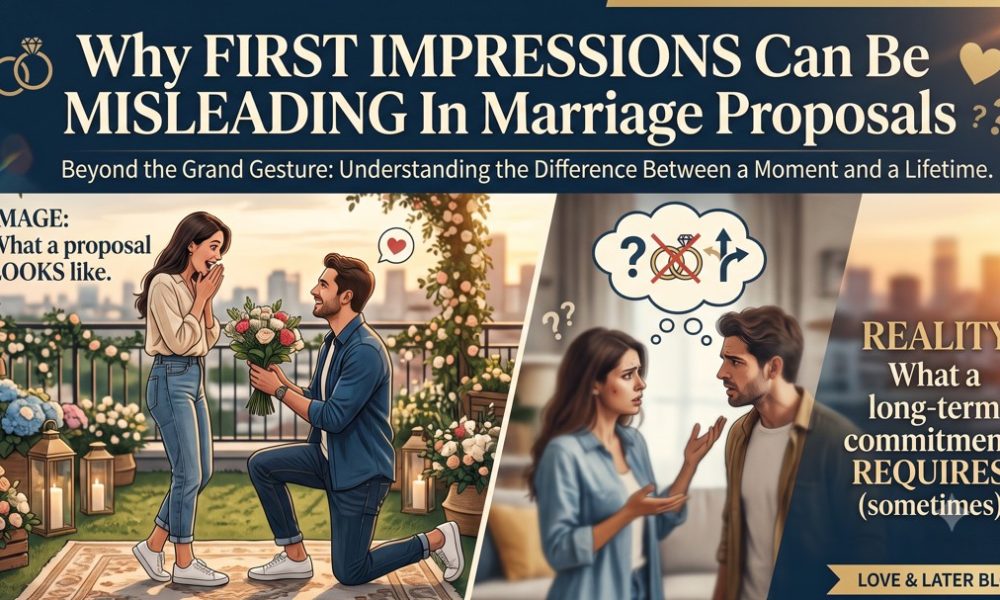

Why First Impressions Can Be Misleading in Marriage Proposals
A marriage proposal is often introduced through a very small window. It may begin with a photograph, a short biodata, a few details about education and work, a brief conversation, or a family meeting where everyone is trying to appear polite, composed, and impressive. In only a few minutes, people begin forming opinions: “They seem too quiet.” “They are very confident.” “Their family looks simple.” “They do not earn enough.” “They look perfect.” “They are not my type.” “This feels right.”
These reactions are natural. Human beings are built to make fast judgments. In many situations, quick impressions help us stay safe, recognize social cues, and decide how to respond. But marriage is not a short interaction. It is a long-term partnership that involves trust, communication, shared responsibility, emotional safety, family dynamics, conflict resolution, money, health, values, and personal growth. Judging a potential life partner mainly by the first meeting can be like judging an entire book from one line on the cover.
This does not mean first impressions are useless. Sometimes they do reveal something meaningful. A person’s courtesy, punctuality, respect for boundaries, and basic manner of speaking can offer early clues about character. Still, first impressions are incomplete. They are shaped by nervousness, social pressure, expectations, appearance, cultural assumptions, previous experiences, and even the mood of the day. The danger begins when we treat an early impression as a final verdict.
In marriage proposals, especially where families are involved, the pressure to decide quickly can make this problem even bigger. People may feel they need to say yes or no after one visit, one phone call, or one carefully arranged meeting. Yet the person in front of them may be anxious, shy, tired, grieving, unfamiliar with formal conversations, or simply trying too hard to make a good impression. Likewise, someone who appears charming and impressive in a short meeting may not necessarily be emotionally mature, honest, or prepared for the realities of marriage.
The wisest approach is not to ignore first impressions, but to place them in perspective. A first impression should be a starting point for curiosity, not the end of the conversation.
The First Meeting Is Usually a Performance
Most people do not behave completely naturally during a marriage proposal meeting. The setting itself encourages performance. Families prepare their homes, choose clothes carefully, plan questions in advance, and try to present the best possible version of themselves. The person being considered for marriage may have rehearsed answers about career goals, family values, hobbies, expectations, and future plans. Even when everyone is sincere, the atmosphere is often formal and emotionally loaded.
This means a first meeting may show how well someone performs under social pressure, not necessarily who they are in daily life.
A very quiet person may be seen as uninterested, arrogant, or lacking confidence. In reality, they may simply be overwhelmed by sitting in front of unfamiliar people who are evaluating them. A person who speaks a lot may be seen as warm and outgoing, but they may be using conversation to hide insecurity. Someone who appears exceptionally polished may genuinely be disciplined and responsible, or they may have learned to create a good image while avoiding deeper questions.
The same is true for families. A family may appear reserved because they are naturally private, not because they are unfriendly. Another family may appear highly welcoming because they understand social etiquette, but this alone does not tell us how they handle disagreements, boundaries, or respect after marriage.
A proposal meeting is often closer to an interview than an ordinary conversation. Everyone knows they are being watched. Everyone is trying to avoid making a mistake. That is why it is unfair to expect a complete picture from one interaction.
Appearance Creates Powerful Assumptions
Physical appearance is often the first thing people notice. A neat outfit, confident posture, fashionable style, good grooming, height, complexion, body type, or social-media presence can quickly influence how a person is perceived. In many marriage discussions, appearance is given enormous importance because it is immediate and easy to judge.
However, appearance can create both positive and negative illusions.
Someone who looks stylish, well-groomed, and socially confident may be assumed to be successful, emotionally stable, or mature. But these qualities do not automatically come together. A person can have an impressive appearance and still struggle with anger, dishonesty, irresponsibility, controlling behavior, or poor communication. Similarly, someone who dresses simply, speaks softly, or does not match popular beauty standards may be kind, resilient, intelligent, loyal, and deeply supportive.
The problem is not caring about attraction. Attraction matters in marriage, and pretending otherwise is unrealistic. The problem is allowing surface-level preferences to overpower the deeper qualities that actually sustain a relationship.
Beauty changes with age. Fashion changes with time. Health can change unexpectedly. Income can rise and fall. But character becomes more important as life becomes more complicated. When couples face stress, illness, family conflict, financial pressure, parenting challenges, or career changes, it is not a perfect photo or a polished outfit that protects the relationship. It is patience, honesty, emotional maturity, and mutual respect.
A good first impression based on appearance may open the door, but it should never close the door on deeper evaluation.
Nervousness Is Often Misread as Personality
One of the most common mistakes in marriage proposals is confusing nervous behavior with personality. A person may appear awkward, hesitant, quiet, overly formal, or even cold because they are anxious. Being evaluated for marriage is not a casual experience. It can feel deeply personal because people are not just judging education or work experience; they are judging appearance, family background, habits, personality, and future potential.
Some people become talkative when nervous. Others become silent. Some laugh too much. Some give short answers. Some avoid eye contact. Some may appear serious because they are trying not to say the wrong thing. These responses do not necessarily indicate poor character or lack of interest.
Consider two people in a first meeting. One speaks smoothly, smiles often, and answers every question with confidence. The other pauses, thinks before responding, and struggles to keep the conversation flowing. Many people will naturally be drawn to the first person. But after a few meetings, they may discover that the quieter person is a far better listener, more thoughtful, and more emotionally reliable. The confident speaker may still be wonderful, but confidence alone is not proof of compatibility.
Giving someone time to become comfortable can reveal qualities that a first meeting hides. It also shows maturity on your part. A future spouse does not need to be flawless in formal settings; they need to be able to build trust over time.
A Biodata Is a Summary, Not a Human Being
In many marriage proposals, a biodata is treated almost like a complete profile of a person. It may include age, height, education, occupation, salary, family details, hobbies, religious background, and expectations. These details are useful. They help people understand basic compatibility and decide whether an initial conversation is worth having.
But a biodata cannot capture the most important parts of a person.
It cannot fully explain how they handle disappointment. It cannot show whether they apologize when they are wrong. It cannot reveal whether they respect domestic work, care for elderly family members, support a partner’s ambitions, or remain calm during conflict. It cannot tell you whether they are emotionally available, financially responsible, or capable of compromise.
A biodata may say that someone has a high-paying job, but it may not show whether they have healthy financial habits. It may mention a prestigious degree, but it cannot measure kindness. It may list travel as a hobby, but it cannot show whether the person values quality time or avoids responsibility. It may describe someone as “family-oriented,” but that phrase can mean very different things to different people.
A person is not a checklist. A marriage is not a transaction between two resumes. Practical information matters, but it should lead to meaningful questions rather than quick conclusions.
For example, instead of only asking, “What is your salary?” it may be more useful to ask, “How do you plan your finances?” Instead of only asking, “Do you want to live with family?” ask, “What kind of boundaries and responsibilities do you believe are healthy after marriage?” These questions help reveal values, not just facts.
Families Also Have First-Impression Bias
Marriage proposals often involve more than two individuals. Families may be deeply involved in the process, and their impressions can strongly shape the decision. This can be helpful because family members may notice red flags or practical concerns that an emotionally involved person overlooks. At the same time, families can also make quick judgments based on social status, language, clothing, home size, neighborhood, profession, regional background, or perceived prestige.
Such judgments can be misleading.
A family that appears financially modest may still be loving, educated, respectful, and emotionally healthy. A wealthy family may have resources but also rigid expectations, unhealthy control, or unresolved conflict. A highly educated family may value achievement but struggle with empathy. A family that speaks less may be respectful, while a very expressive family may be genuinely warm—or may simply be skilled at social presentation.
The goal is not to judge families harshly. Every family has imperfections. The better question is whether the family respects the couple’s independence, treats people with dignity, communicates openly, and understands healthy boundaries.
It is especially important to observe how family members treat people they do not need to impress. How do they speak to household staff, drivers, waiters, younger relatives, or elderly family members? Do they dismiss others? Do they make insulting comments about people’s appearance, class, profession, or background? Do they allow the potential couple to speak privately and respectfully? These small moments can sometimes reveal more than formal introductions.
Still, one observation should not become a permanent label. A family may be stressed during a visit, dealing with a difficult situation, or simply unfamiliar with formal proposal customs. Look for patterns, not isolated incidents.
Charm Can Hide Important Red Flags
While first impressions can be unfairly negative, they can also be dangerously positive. This is why taking time matters. Some people are naturally charismatic. They know how to make others feel special, tell impressive stories, speak respectfully in front of elders, and create a strong emotional connection quickly. Charm is not a bad quality. It can make conversation easier and help people feel comfortable.
But charm should not be mistaken for character.
A person may appear romantic, confident, generous, and attentive during the early stage of a proposal. Yet the real test is whether their behavior remains respectful when they are frustrated, disagreed with, or asked to compromise. Do they become defensive? Do they pressure you to make a fast decision? Do they dismiss your concerns? Do they become angry when you set boundaries? Do they try to isolate you from friends or family? Do their stories remain consistent over time?
Healthy people do not fear reasonable questions. They do not rush someone into commitment by creating guilt or urgency. They understand that marriage is serious and that both people deserve time to make an informed decision.
One of the strongest signs of maturity is consistency. A person who is respectful only in public but rude in private is not truly respectful. A person who speaks beautifully about values but behaves differently when challenged is showing a gap between words and actions. Time helps reveal whether someone is consistent.
Compatibility Is More Than Shared Interests
People often look for obvious similarities in marriage proposals: same education level, similar family background, shared language, common hobbies, religion, career goals, or favorite activities. These things can make the beginning easier, but they do not guarantee compatibility.
Two people may both enjoy traveling, movies, food, or music and still struggle to build a peaceful marriage. On the other hand, two people with different hobbies may have a strong relationship because they communicate honestly, respect differences, and support each other’s growth.
Real compatibility usually becomes visible in less glamorous areas:
- How do both people handle conflict?
- Can they discuss money without shame or secrecy?
- Do they respect each other’s career goals?
- How do they feel about household responsibilities?
- What are their expectations about children?
- How much involvement should extended family have?
- How do they respond to stress?
- Are they willing to apologize and change?
- Do they respect each other’s faith, identity, privacy, and friendships?
- Can they disagree without humiliating each other?
These issues may not be obvious during a first meeting because they require trust and honest conversation. Some people avoid them because they fear sounding too serious or demanding. But marriage is serious. Discussing important matters early is not negative; it is responsible.
The goal is not to find someone identical to you. It is to find someone with whom differences can be managed respectfully.
Social Status Can Distort Judgment
Another reason first impressions can mislead in marriage proposals is the influence of social status. People may be quickly impressed by job titles, foreign degrees, high salaries, luxury cars, expensive homes, family wealth, or social-media popularity. These things can suggest stability, ambition, or opportunity. They may also matter for practical reasons.
However, status is not the same as emotional security.
A person with a successful career may still be unavailable, work-obsessed, dismissive, or controlling. Someone from a wealthy family may be kind and grounded, but another may expect a spouse to accept unhealthy levels of dependence or pressure. Someone with fewer financial resources may be hardworking, responsible, emotionally mature, and committed to building a stable future.
Financial compatibility is important, but it should be discussed honestly. The key is not only how much someone earns, but how they think about money. Are they transparent? Do they have debts? Are they reckless spenders? Do they believe financial decisions should be shared? Do they expect one partner to carry all responsibilities? Are they respectful about differences in income?
A stable marriage requires practical planning, but it also requires humility. When status becomes the main measure of worth, people may overlook someone who could be a deeply compatible partner—or choose someone whose lifestyle looks impressive but whose values create long-term unhappiness.
Past Experiences Shape Our Reactions
First impressions are not formed only by the person in front of us. They are also shaped by our own past. Someone who once had a bad experience with an overly confident person may feel suspicious of confidence. Someone who grew up in a quiet household may misread an expressive family as dramatic. Someone who values career ambition may see a person with a simpler lifestyle as unmotivated, even when that person has different but meaningful goals.
This is called bias, and everyone has it.
Bias does not make a person bad. It simply means that we must be careful. Before rejecting or accepting someone based on an early feeling, it helps to ask: “Am I responding to this person as they are, or am I responding to a memory, fear, expectation, or stereotype?”
For example, a person may be rejected because they do not speak English fluently, dress in a fashionable way, or have a glamorous profession. But none of these things automatically determine whether they can become a supportive spouse. Similarly, someone may be accepted too quickly because they remind us of a person we admire or fit an image we have imagined for years.
Self-awareness is a powerful protection against poor decisions. The more honestly we understand our own priorities and biases, the more fairly we can evaluate another person.
Time Reveals Patterns
The strongest argument against relying too heavily on first impressions is simple: time reveals patterns.
A single meeting tells you how someone behaved once. Several conversations, respectful interactions, and carefully observed situations can show how someone behaves consistently. Over time, you may notice whether they keep promises, respond with empathy, respect your pace, communicate clearly, and behave similarly with different people.
This does not mean a proposal process needs to become endless or overly complicated. It means important decisions should not be rushed. Within appropriate cultural, religious, and family boundaries, both people should have enough opportunity to communicate honestly and ask meaningful questions.
A useful approach is to observe a person in different emotional situations. How do they respond when plans change? How do they speak when they are disappointed? Can they accept a “no” without becoming cold or angry? Are they curious about your views, or do they only want to be admired? Do they ask questions and listen to the answers? Are they dependable in small matters?
Patterns matter more than promises.
A person may say, “I respect women,” “I value family,” “I believe in equality,” or “I will always support you.” These are good statements, but actions make them credible. Do they respect your schedule? Do they speak respectfully about women in their family? Do they support your education or career plans? Do they make decisions with you rather than for you? Do they maintain respectful boundaries in communication?
A healthy proposal process allows enough time for words and behavior to align.
Asking Better Questions Creates Better Decisions
Many proposal conversations stay on the surface because people are afraid of making the meeting uncomfortable. They ask about favorite foods, hobbies, education, job location, and future travel plans. These questions are useful for starting conversation, but they are not enough for understanding marriage readiness.
Deeper questions should be asked with respect, not as an interrogation. The purpose is not to catch someone in a mistake. The purpose is to understand how they think.
Some meaningful topics include:
- Communication: How do you prefer to discuss problems when you are upset? Do you need time alone before talking, or do you prefer to resolve things quickly?
- Conflict: What did you learn from disagreements in your family? What does a respectful argument look like to you?
- Finances: How do you manage saving, spending, debt, and financial responsibilities? What do you expect from a spouse financially?
- Career and education: How should both partners support each other’s goals? Would you be comfortable if your spouse needed to relocate, study further, or change careers?
- Family boundaries: How involved do you expect parents and relatives to be in daily decisions after marriage?
- Household responsibilities: What does a fair division of work at home look like? How do you view cooking, cleaning, caregiving, and parenting?
- Children: Do you want children? If yes, what are your expectations about timing, parenting, and responsibilities?
- Faith and values: Which values are non-negotiable for you? How do you want those values to influence family life?
- Health and difficult times: How do you think a couple should support each other during illness, unemployment, grief, or stress?
- Personal space: What does privacy mean to you in marriage? How do you feel about friendships, social media, and time with friends or family?
The answers do not need to match perfectly. What matters is whether both people can talk respectfully, listen without judgment, and find a workable path forward.
The Difference Between a Red Flag and an Imperfect Moment
Avoiding snap judgments does not mean ignoring warning signs. Some behaviors should be taken seriously from the beginning. Disrespect, dishonesty, manipulation, extreme jealousy, pressure for a rushed commitment, abusive language, controlling behavior, financial secrecy, or refusal to respect boundaries are not small issues. These are not things to dismiss simply because someone made a good first impression in other ways.
At the same time, not every imperfect moment is a red flag.
Being nervous, speaking awkwardly, arriving slightly late due to a genuine reason, having a different accent, dressing simply, or being shy around families does not automatically signal a problem. Everyone has weaknesses. A future spouse does not need to be perfect; they need to be willing to communicate, learn, and treat others with dignity.
The key difference is pattern and accountability.
An imperfect moment is usually followed by understanding, explanation, or an effort to improve. A red flag is often repeated, minimized, blamed on others, or used to make you doubt your own judgment. For example, a person who makes one insensitive comment and sincerely apologizes may be learning. A person who repeatedly insults you and calls you “too sensitive” is showing a more serious pattern.
Trust your instincts, but also test them with time, conversation, and evidence.
Respectful Patience Is Not Indecision
Some people worry that taking time in a marriage proposal will make them appear indecisive or less interested. But thoughtful patience is not the same as confusion. It is possible to be serious about a proposal while still asking for enough time to understand the person properly.
A mature person will respect this. They may also need time themselves. Marriage affects not only the wedding day but every ordinary day afterward: who handles stress, who makes compromises, who supports dreams, who shares responsibilities, and who stays kind when life is difficult.
A rushed decision may feel romantic or efficient, but it can create regret when important differences appear later. A careful decision does not guarantee a perfect marriage, because no one can predict everything. However, it increases the chance that the decision is based on reality rather than fantasy.
Patience also allows people to notice their own feelings more clearly. Sometimes the excitement of a new proposal is mistaken for compatibility. Sometimes the fear of being alone is mistaken for love. Sometimes family pressure is mistaken for certainty. Taking a little time can separate genuine connection from temporary emotion.
Building a More Honest Proposal Process
A healthier marriage proposal process does not need to be cold, suspicious, or overly formal. It can be respectful, warm, and intentional. Both people should feel safe enough to be honest about their expectations, fears, goals, and limitations.
Here are a few principles that can make the process more meaningful:
First, allow respectful private conversation where appropriate. It is difficult to understand compatibility when every question is asked in front of a room full of relatives. Families can remain involved without controlling every interaction.
Second, focus on values as much as achievements. Education, income, and family background are relevant, but they should not overshadow respect, empathy, responsibility, and emotional maturity.
Third, verify important practical information without shame. Honest discussion about career, finances, health, location, family responsibilities, and long-term goals is not distrustful. It is part of responsible decision-making.
Fourth, observe consistency. Notice whether words and actions match over time.
Fifth, encourage both sides to ask questions. A proposal is not an examination of one person by another. Both individuals have the right to understand whether the match is healthy and compatible.
Finally, do not let fear make the decision for you. Fear of social judgment, age, loneliness, family pressure, or “missing a good proposal” can push people into choices that do not feel right. A marriage should begin with mutual willingness, not pressure.

Misleading
Conclusion: Look Beyond the First Glance
First impressions are powerful because they are fast, emotional, and easy to remember. In marriage proposals, they can influence decisions before people have had the chance to know each other properly. A smile, a photograph, a job title, a quiet answer, a stylish outfit, a family home, or a confident conversation can all create a strong initial feeling. But none of these things alone can predict the quality of a marriage.
The person who seems ordinary at first may become extraordinary through kindness, loyalty, patience, and emotional strength. The person who seems perfect at first may later reveal values that do not match yours. That is why the goal should not be to ignore first impressions, but to treat them as one piece of a much larger picture.
A good marriage is rarely built on the most impressive first meeting. It is built on truth, respect, communication, shared effort, and the ability to grow together through both ordinary and difficult days. Before saying yes or no, look beyond the first glance. Ask better questions. Take enough time. Watch for patterns. Listen to your instincts, but balance them with evidence.
In the end, the best proposal is not the one that looks perfect from the outside. It is the one in which two people can see each other clearly, accept each other honestly, and choose to build a life with mutual respect and care.
