






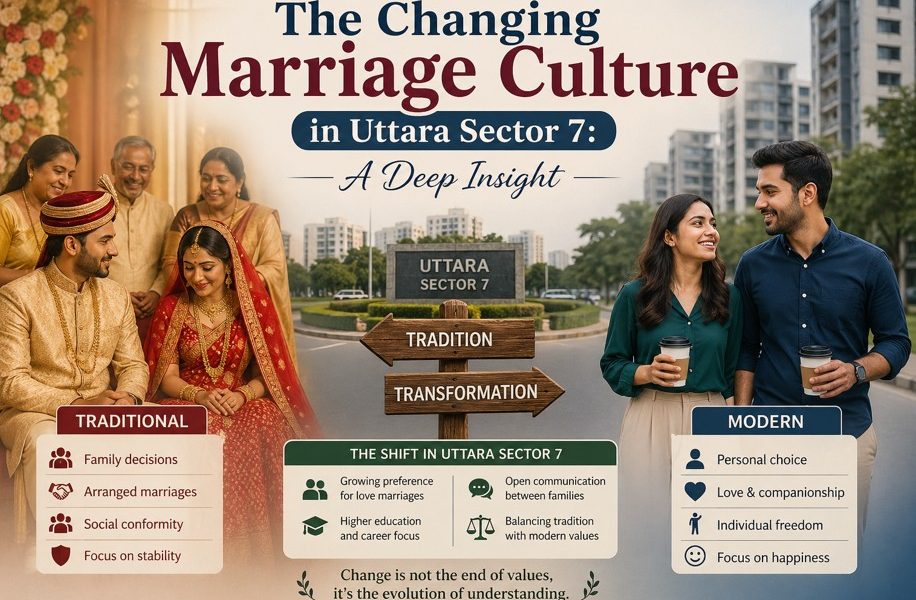

The Changing Marriage Culture in Uttara Sector 7: A Deep Insight
Introduction: A New Era of Marriage in Uttara Sector 7
Uttara Sector 7, one of the most organized and rapidly evolving residential zones in Dhaka, is no longer just a place of modern apartments, busy professionals, and growing families—it has become a reflection of changing marriage culture in urban Bangladesh.
Marriage, once defined strictly by tradition, family authority, and social expectations, is now undergoing a remarkable transformation in areas like Uttara. Today’s generation is rewriting the rules—blending tradition with modern thinking, balancing family values with personal choice, and redefining what it truly means to build a life together.
This blog dives deep into the evolving marriage culture in Uttara Sector 7—exploring the social, economic, psychological, and technological factors that are reshaping how people meet, choose, and commit to life partners.
- Understanding Uttara Sector 7: A Unique Social Landscape
To understand the changing marriage culture, you first need to understand the people.
Uttara Sector 7 is a diverse and dynamic community made up of:
- Educated professionals
- Entrepreneurs and business families
- NRB (Non-Resident Bangladeshi) connections
- Middle to upper-middle-class households
This area is not purely traditional, nor fully Westernized—it is a hybrid society, where both old values and new ideologies coexist.
According to local matchmaking insights, Uttara Sector 7 residents typically seek partners who align with:
- Education and career goals
- Lifestyle compatibility
- Family values
- Personal ambitions (Kabinbd)
This alone signals a major shift—from “family-approved match” to “compatible life partner.”
- The Traditional Marriage Model: What It Used to Be
Before diving into change, let’s revisit the past.
In Bangladesh, especially in urban areas before modernization:
- Families were the primary decision-makers
- Matchmaking happened through relatives or community networks
- Bride and groom had minimal interaction
- Marriage was considered a duty, not a personal choice
The system focused heavily on:
- Family reputation
- Religion
- Social status
- Financial stability
Individual preferences were often secondary.
As studies show, arranged marriage historically functioned as a family-driven institution with limited personal involvement (Gulshan Media)
But Uttara Sector 7 is no longer operating under this rigid structure.
- The Rise of Individual Choice
One of the biggest transformations in Uttara Sector 7 is the shift from obedience to autonomy.
Then:
- Parents chose
- Children accepted
Now:
- Parents suggest
- Individuals decide
Urban youth today view marriage as a life decision, not a social obligation.
Factors driving this shift include:
- Higher education
- Exposure to global culture
- Career prioritization
- Emotional awareness
Modern individuals now ask:
- “Is this person compatible with me?”
- “Will this marriage support my goals?”
- “Do we understand each other emotionally?”
This psychological shift—from duty to choice—is one of the core reasons marriage culture is changing.
- Education and Career: The New Filters
In Uttara Sector 7, education and career are no longer “bonus qualities”—they are primary criteria.
Key Trends:
- Women are highly educated and career-focused
- Men are expected to be financially stable and progressive
- Dual-income marriages are increasingly common
Urban Bangladesh has seen a rise in women’s empowerment and economic participation, influencing marriage decisions significantly (Daily Observer)
Impact on Marriage:
- Marriage is delayed until career stability
- Partners expect mutual support
- Financial planning becomes a joint responsibility
Marriage is no longer just about building a family—it’s about building a shared future.
- The Influence of Technology and Social Media
Technology has revolutionized matchmaking in Uttara Sector 7.
Before:
- Relatives introduced matches
- Meetings were arranged physically
Now:
- Online platforms shortlist candidates
- Social media reveals personality and lifestyle
- Communication happens before family involvement
Internet access, smartphones, and digital platforms have made partner search faster, broader, and more personalized (MarriageChime)
The Result:
- More options
- Better screening
- Higher expectations
However, this also introduces challenges:
- Decision fatigue
- Unrealistic standards
- Trust issues
- The Rise of Professional Matchmaking Services
Another major shift in Uttara Sector 7 is the growing demand for professional marriage media services.
Why?
Because modern families want:
- Privacy
- Verified profiles
- Compatible matches
- Time efficiency
Unlike traditional matchmaking, professional services:
- Understand lifestyle compatibility
- Filter candidates based on preferences
- Maintain confidentiality
This reflects a deeper change—marriage is becoming more structured, strategic, and personalized.
- From Family-Controlled to Family-Guided Decisions
Family still plays a crucial role—but the nature of involvement has changed.
Old Model:
- Family controlled everything
New Model:
- Family guides and supports
Parents now:
- Provide suggestions
- Evaluate background
- Respect final decisions
Urban marriage today is a collaborative process, not a hierarchical one.
This aligns with broader trends where marriage is evolving into a partnership between individuals with family support (Gulshan Media)
- Changing Expectations in a Life Partner
In Uttara Sector 7, expectations have become more complex and refined.
Earlier Expectations:
- Good family
- Financial stability
- Basic compatibility
Modern Expectations:
- Emotional intelligence
- Communication skills
- Shared values
- Lifestyle alignment
- Mental health awareness
People now prioritize:
- Peace over prestige
- Compatibility over status
- Understanding over appearance
This is a major cultural shift.
- The Delay in Marriage: A Growing Trend
Marriage is happening later than before.
Reasons:
- Career focus
- Financial pressure
- Personal development
- Fear of wrong decisions
In today’s Bangladesh, marriage is increasingly influenced by economic realities and personal aspirations, not just tradition (Daily Observer)
Consequences:
- More mature decision-making
- Increased pressure from families
- Reduced impulsive marriages
- Love + Arranged = The Hybrid Model
Uttara Sector 7 is witnessing the rise of hybrid marriages.
This means:
- Individuals meet (online/offline)
- Develop understanding
- Involve families later
This model combines:
✔ Emotional connection
✔ Family approval
It’s the perfect balance between tradition and modernity.
- Economic Pressure and Marriage Decisions
Marriage in Uttara is no longer just cultural—it’s economic.
Factors include:
- Rising living costs
- Housing expenses
- Wedding costs
- Lifestyle expectations
Marriage is now seen as a financial partnership, not just a social union.
This shift is redefining:
- When people marry
- Whom they marry
- How they plan their future
- The Changing Role of Women
One of the most powerful transformations is the changing role of women.
Today’s Women in Uttara:
- Educated
- Career-driven
- Independent
- Opinionated
They are no longer passive participants—they are decision-makers.
Impact:
- Equal say in partner selection
- Demand for respect and support
- Rejection of outdated gender roles
This is reshaping the foundation of marriage itself.
- Social Pressure Still Exists (But It’s Evolving)
Despite modernization, social pressure hasn’t disappeared.
People still face:
- Questions about marriage age
- Family expectations
- Social comparisons
However, the nature of pressure is changing.
Younger generations are:
- Questioning norms
- Delaying decisions
- Prioritizing happiness
This creates a tension between tradition and individuality.
- Challenges in Modern Marriage Culture
The evolving system is not perfect.
Common Challenges:
- Too many options → confusion
- High expectations → disappointment
- Emotional immaturity → conflict
- Social media influence → unrealistic comparisons
Modern marriage is more flexible—but also more complicated.
- The Future of Marriage in Uttara Sector 7
Looking ahead, marriage culture will continue to evolve.
Expected Trends:
- More personalized matchmaking
- Greater focus on mental compatibility
- Increased use of technology
- Stronger role of professional services
- Delayed but more stable marriages
Marriage in Uttara will likely become:
👉 More conscious
👉 More selective
👉 More balanced
Conclusion: Tradition Is Not Dying—It’s Transforming
Marriage in Uttara Sector 7 is not disappearing—it’s evolving.
It is no longer:
❌ Blindly arranged
❌ Purely family-controlled
❌ Socially forced
Instead, it is becoming:
✔ Thoughtful
✔ Balanced
✔ Personalized
✔ Future-oriented
The modern marriage culture in Uttara represents a new model for urban Bangladesh—one that respects tradition but embraces change.
The Changing Marriage Culture in Uttara Sector 7: A Deep Insight (Extended Analysis)
16. The Impact of Global Exposure on Marriage Mindset
One of the most underrated yet powerful forces shaping marriage culture in Uttara Sector 7 is global exposure.
Many families in Uttara are:
- Connected to relatives abroad
- Educated in international institutions
- Influenced by global media (Netflix, YouTube, social platforms)
This exposure subtly changes how people think about marriage.
Key Changes:
- Marriage is seen as a partnership, not a hierarchy
- Emotional compatibility becomes essential
- Gender roles become more flexible
- Divorce is less stigmatized than before
Young individuals growing up in this environment begin to compare:
- “What I see globally” vs “What society expects locally”
This creates a new hybrid mindset—modern but still rooted in cultural identity.
17. The Rise of Emotional Compatibility as a Core Factor
In the past, emotional compatibility was often ignored or assumed.
Today, it is one of the most critical decision-making factors.
Why?
Because people in Uttara Sector 7 now understand:
- Marriage is long-term
- Daily communication matters
- Mental peace is essential
What people now look for:
- Can we talk openly?
- Do we resolve conflicts maturely?
- Do we respect each other’s boundaries?
This shift is deeply psychological. It reflects a move toward emotionally intelligent marriages, rather than socially acceptable ones.
18. The Influence of Peer Circles and Social Comparison
In tightly connected urban areas like Uttara Sector 7, peer influence plays a big role.
People observe:
- Friends getting married
- Colleagues choosing partners
- Social media wedding trends
This creates two effects:
1. Positive Influence:
- Better awareness
- Learning from others’ experiences
- Improved expectations
2. Negative Influence:
- Comparison pressure
- Unrealistic expectations
- Fear of missing out (FOMO)
Many individuals now feel:
👉 “Everyone is settling down—am I falling behind?”
👉 “Why isn’t my match as perfect as theirs?”
This comparison culture is subtly reshaping marriage decisions.
19. The Changing Dynamics of First Meetings
First meetings in Uttara Sector 7 have evolved dramatically.
Earlier:
- Formal
- Family-dominated
- Limited conversation
Now:
- Casual
- Sometimes private (with family awareness)
- Focused on understanding personality
Modern first meetings often include discussions about:
- Career goals
- Lifestyle choices
- Future plans
- Personal values
This reflects a deeper shift—from surface-level interaction to meaningful evaluation.
20. The Role of Communication Before Marriage
Communication has become a pre-marriage necessity.
Couples now:
- Talk regularly before finalizing decisions
- Discuss expectations openly
- Try to understand each other’s mindset
Why this matters:
Because lack of communication is one of the biggest causes of marital dissatisfaction.
Modern individuals in Uttara Sector 7 prefer:
✔ Clarity before commitment
✔ Transparency over assumptions
This reduces the risk of post-marriage conflicts.
21. The Hidden Fear of Making the Wrong Choice
Despite having more freedom, people today face a new challenge:
👉 Fear of choosing the wrong partner
This fear is stronger because:
- Divorce is more visible now
- Failed marriages are discussed openly
- Expectations are higher
Result:
- Overthinking
- Delayed decisions
- Constant doubt
Many individuals keep asking:
- “What if there’s someone better?”
- “What if this doesn’t work out?”
This is one of the biggest psychological barriers in modern matchmaking.
22. The “Too Many Options” Problem
Technology has created abundance—but abundance brings confusion.
In Uttara Sector 7, people often have:
- Multiple proposals
- Online profiles to choose from
- Continuous new options
The downside:
- Difficulty in committing
- Constant comparison
- Lack of satisfaction
This phenomenon is known as:
👉 “Choice Overload”
Instead of making things easier, too many options often make decisions harder.
23. The Shift Toward Lifestyle Compatibility
Lifestyle has become a major deciding factor.
People now consider:
- Work-life balance
- Social habits
- Travel preferences
- Religious practices
- Daily routines
Why lifestyle matters:
Because even if two people are “good,” they may not be compatible in daily life.
For example:
- One prefers a quiet life, another loves socializing
- One is career-focused, another wants family focus
These differences can create long-term conflict.
24. The Increasing Importance of Mental Health Awareness
Mental health is now part of the marriage conversation.
This is a very new development in Bangladesh.
Modern individuals consider:
- Stress handling ability
- Emotional stability
- Past trauma
- Anger management
They are beginning to understand:
👉 “A stable mind is more important than a perfect profile.”
This shift reflects a deeper maturity in how people approach relationships.
25. Changing Wedding Trends in Uttara Sector 7
Marriage culture isn’t just about choosing a partner—it’s also about how weddings are celebrated.
New Trends:
- Smaller, more intimate weddings
- Destination-style events
- Personalized ceremonies
- Budget-conscious planning
Why this shift?
- Rising costs
- Preference for quality over show-off
- Changing social values
Many families now prefer:
👉 Meaningful weddings over extravagant ones
26. Financial Transparency Before Marriage
Money matters are no longer hidden.
Couples now discuss:
- Income
- Expenses
- Savings
- Financial responsibilities
This is a major cultural shift.
Earlier, these topics were often avoided.
Now, they are seen as essential for:
✔ Trust
✔ Stability
✔ Future planning
Marriage is increasingly viewed as a financial partnership.
27. The Role of Trust in Modern Matchmaking
Trust has become more complex in today’s world.
Challenges:
- Fake online profiles
- Misrepresentation
- Hidden information
Solution:
People now rely on:
- Verified matchmaking services
- Background checks
- Family involvement
Trust is no longer assumed—it is built and verified.
28. Gender Expectations Are Evolving
Traditional gender roles are changing rapidly.
Earlier:
- Men = providers
- Women = homemakers
Now:
- Both contribute financially
- Both share responsibilities
- Both expect mutual respect
This shift is creating:
👉 More balanced marriages
👉 But also new expectations and challenges
29. The Influence of Religion in Modern Marriage
Religion still plays a role—but in a more personalized way.
People now:
- Choose how strictly they want to follow practices
- Seek partners with similar beliefs
- Balance faith with modern life
This creates a more flexible religious approach in marriage.
30. Divorce Awareness and Its Impact
Divorce, once a taboo topic, is now more visible.
Impact on marriage decisions:
- People are more cautious
- They take longer to decide
- They prioritize compatibility
This awareness is both:
✔ Positive (better decision-making)
❌ Challenging (increased fear)
31. The Growing Role of Compatibility Over Status
Status used to dominate marriage decisions.
Now, compatibility is taking over.
People prioritize:
- Peace
- Understanding
- Emotional connection
Over:
- Wealth
- Social status
- External appearance
This is one of the most meaningful cultural transformations.
32. The Future Generation’s Perspective on Marriage
The next generation in Uttara Sector 7 will likely:
- Marry even later
- Be more selective
- Focus heavily on mental and emotional compatibility
Marriage will become:
👉 Less frequent
👉 But more meaningful
33. Why Some People Still Struggle to Find the Right Match
Despite all progress, many individuals face challenges.
Reasons include:
- Unrealistic expectations
- Poor communication
- Fear of commitment
- Over-dependence on online platforms
This shows that while the system has improved, human psychology still plays a major role.
This shows that while the system has improved, human psychology still plays a major role.
34. The Importance of Guidance in Modern Matchmaking
With so many options and complexities, guidance is becoming essential.
Families and individuals now seek:
- Expert advice
- Structured matchmaking
- Personalized recommendations
This ensures:
✔ Better compatibility
✔ Less confusion
✔ Faster decisions
35. Final Reflection: A Culture in Transition
Marriage culture in Uttara Sector 7 is not static—it is constantly evolving.
It reflects:
- The aspirations of modern individuals
- The values of traditional families
- The influence of global culture
This transformation is not about abandoning tradition—it is about adapting it to modern realities.
Extended Closing Thought
Marriage in Uttara Sector 7 is no longer just a milestone—it is a carefully considered life decision.
People are no longer asking:
❌ “Is this a good family?”
They are asking:
✔ “Is this the right person for my life?”
✔ “Can we grow together?”
✔ “Will this bring long-term peace and stability?”
Ultimate Conclusion
The changing marriage culture in Uttara Sector 7 represents a larger shift happening across urban Bangladesh.
It is:
- More thoughtful
- More selective
- More emotionally aware
- More future-focused
And most importantly:
👉 It is becoming more human.

Other Articles

“বেকার ছেলেকে কেউ বিয়ে করে না”—মিথ নাকি বাস্তবতা?