






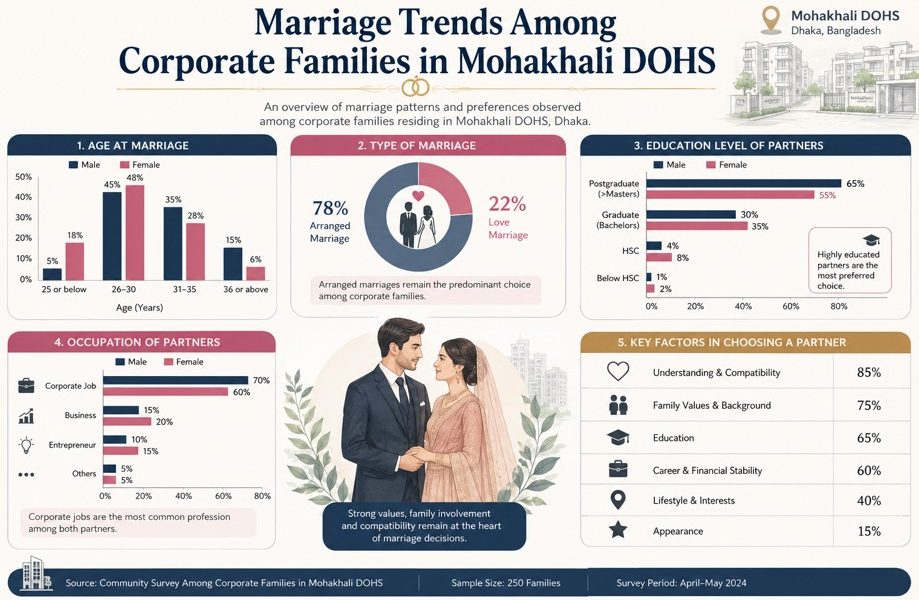

Marriage Trends Among Corporate Families in Mohakhali DOHS
In recent years, marriage culture among corporate and upper-middle-class families in Mohakhali DOHS has changed significantly. What was once a strictly family-controlled process has now evolved into a more balanced, modern, and strategic decision involving lifestyle compatibility, education, career goals, emotional maturity, financial stability, and long-term values.
Located in one of the most organized and secure residential zones in Dhaka, Mohakhali DOHS has become home to senior corporate executives, multinational company employees, doctors, bankers, engineers, diplomats, entrepreneurs, and highly educated families. The area is known for its planned environment, safety, privacy, and elite urban lifestyle. (কাবীন ম্যাট্রিমনি | Kabin Matrimony)
As the professional world in Bangladesh changes rapidly, so do the expectations surrounding marriage. Corporate families today no longer focus only on family reputation or financial status. Instead, they are increasingly prioritizing compatibility, education, emotional intelligence, career mindset, religious values, communication style, and future planning.
This shift is creating entirely new marriage trends inside affluent areas like Mohakhali DOHS.
The Rise of Career-Oriented Marriage Decisions
One of the biggest changes among corporate families is the importance given to career identity.
In previous generations, marriage discussions often focused mainly on family background, social status, and financial condition. Today, corporate families in Mohakhali DOHS pay close attention to:
- Professional stability
- Educational achievements
- Work ethics
- Future career plans
- International exposure
- Communication skills
- Emotional maturity
A senior banker or multinational executive family may now prioritize whether the potential bride or groom understands corporate pressure, work-life balance, and modern relationship expectations.
Marriage is increasingly viewed as a partnership rather than only a social arrangement.
This transformation is strongly connected to broader social changes happening across Bangladesh, including higher education rates, urbanization, women’s employment, and technological advancement. (HRPUB)
Delayed Marriage Is Becoming Common
Another major trend among corporate families is delayed marriage.
Many professionals living in Mohakhali DOHS now marry later than previous generations. Men often marry between ages 30–38, while many educated women prefer marriage after completing higher studies or becoming professionally established.
Several reasons contribute to this:
1. Career Priorities
Corporate professionals spend years building careers before considering marriage seriously. Promotions, overseas training, business growth, and financial security are often prioritized first.
2. High Expectations
Educated families now seek “complete compatibility.” This means families may reject dozens of proposals while searching for the ideal match.
3. Emotional Readiness
Many young professionals prefer emotional maturity over rushed marriage decisions.
4. Financial Planning
Living standards in elite Dhaka areas are expensive. Families increasingly believe stable finances should come before marriage.
Bangladesh’s changing family structure and economic realities are contributing to later marriages and changing marital expectations. (HRPUB)
Preference for Educated and Professionally Established Partners
In Mohakhali DOHS, education is now one of the strongest filters in matchmaking.
Corporate families commonly seek partners who are:
- Doctors
- Engineers
- Bankers
- University graduates
- Chartered accountants
- IT professionals
- Business executives
- NRBs
- Government cadre officers
Degrees from reputable universities in Bangladesh or abroad often increase proposal interest.
Families increasingly believe similar educational and professional backgrounds reduce future conflict because both individuals can understand each other’s lifestyle, ambitions, and communication patterns.
This trend is especially visible among multinational company employees and business families.
Women’s Employment Is No Longer a Barrier
One of the most noticeable changes in elite urban families is the acceptance of working women.
Years ago, many conservative families preferred non-working brides. Today, in areas like Mohakhali DOHS, professionally active women are often considered more desirable.
Corporate families now value women who are:
- Financially independent
- Educated
- Career-focused
- Smart communicators
- Socially confident
- Emotionally mature
Many families believe a working woman contributes positively to family stability, intellectual compatibility, and future financial planning.
However, balance still matters.
Some families prefer careers that allow flexible family management. Others expect mutual understanding regarding work pressure, childcare, and lifestyle expectations.
Privacy and Confidentiality Have Become Extremely Important
Corporate families are highly conscious about reputation and privacy.
In affluent communities like Mohakhali DOHS, families often avoid openly circulating biodata through random brokers or public Facebook groups.
Instead, they increasingly prefer:
- Confidential marriage media
- Verified matchmaking platforms
- Personal referrals
- Trusted networks
- Selective introductions
Privacy concerns include:
- Social image
- Fake profiles
- Data misuse
- Family reputation
- Professional reputation
- Online harassment
This growing need for confidentiality is one reason premium marriage media services are becoming popular among elite Dhaka families. (Gulshan Media)
Marriage Media Is Replacing Traditional Matchmakers
Traditional “ghotok” systems still exist, but their influence is slowly decreasing in urban corporate society.
Professional marriage media services are becoming more attractive because they provide:
- Profile verification
- Privacy protection
- Professional communication
- Educated candidate databases
- Organized matchmaking
- NRB connections
- Time efficiency
Busy executives and entrepreneurs often lack time for traditional proposal searching.
Many now prefer structured matchmaking systems where compatibility filters are applied professionally.
This shift reflects modernization in Bangladesh’s urban marriage culture.
NRB Matches Are Increasing
Another growing trend among Mohakhali DOHS families is interest in NRB (Non-Resident Bangladeshi) marriage proposals.
Families increasingly seek matches from:
- Canada
- USA
- UK
- Australia
- Europe
- Middle East
Reasons include:
- Better future opportunities
- International lifestyle
- Education advantages
- Financial stability
- Immigration possibilities
However, families are now more careful than before.
Corporate families usually verify:
- Immigration status
- Career stability
- Family values
- Religious compatibility
- Long-term settlement plans
Blindly accepting “foreign proposals” is becoming less common.
Instead, families are becoming more analytical and cautious.
Emotional Compatibility Matters More Than Ever
Modern corporate families increasingly recognize that financial status alone cannot guarantee a successful marriage.
Today’s educated generation values:
- Communication
- Respect
- Shared values
- Emotional intelligence
- Mental compatibility
- Lifestyle understanding
Many families now encourage potential couples to speak multiple times before finalizing engagement.
This was far less common in previous generations.
Young professionals often want clarity about:
- Career goals
- Religious practices
- Future living arrangements
- Family responsibilities
- Children
- Financial expectations
- Overseas migration plans
Marriage discussions are becoming deeper and more realistic.
Social Status Still Matters — But Differently
Social status remains important in elite Dhaka marriage culture, but the definition of “status” is changing.
Previously, status mainly meant:
- Wealth
- Land
- Political influence
- Family name
Now, corporate families increasingly define status through:
- Education
- Professional success
- Personality
- Lifestyle
- Communication
- Global exposure
- Ethics
- Family culture
An educated, respectful, emotionally mature individual from a decent family may now receive more interest than someone wealthy but incompatible.
Smaller Family Structures Are Influencing Marriage
Bangladesh’s family system is changing from joint family structures toward smaller nuclear families. (HRPUB)
This has a direct impact on marriage expectations in Mohakhali DOHS.
Modern couples increasingly prefer:
- Independent living
- Personal privacy
- Smaller households
- Shared decision-making
- Equal partnerships
Corporate lifestyles often support nuclear family systems because work schedules are demanding and mobility is high.
This trend affects:
- Living arrangements
- Family roles
- Financial planning
- Parenting styles
- Relationship expectations
Religious Compatibility Remains Important
Despite modernization, religion still plays a major role in matchmaking among corporate families.
However, the approach has become more balanced.
Families increasingly seek:
- Moderate religious values
- Respectful behavior
- Moral character
- Family ethics
- Lifestyle compatibility
Instead of focusing only on outward appearance, many educated families now evaluate whether the individual’s values genuinely align with family culture.
Technology Has Changed Matchmaking
Technology has transformed marriage searching in Dhaka.
Today’s corporate families use:
- Marriage websites
- Private databases
- Video calls
- Social media verification
- LinkedIn profiles
- Professional references
Digital communication allows families to evaluate proposals more efficiently.
However, this also creates new problems:
- Fake identities
- Misleading information
- Edited photos
- False income claims
- Emotional manipulation
As a result, verification has become one of the most important parts of modern matchmaking.
Family Involvement Is Still Strong
Although young people now have more freedom, family approval remains extremely important in Bangladesh.
In Mohakhali DOHS corporate culture, marriage is still viewed as a union between families — not only individuals.
Parents often evaluate:
- Family values
- Social behavior
- Educational background
- Reputation
- Communication style
- Long-term stability
Young professionals may express preferences independently, but most still want family support during final decisions.
This creates a “hybrid marriage culture” where modern individual choice and traditional family involvement coexist.
Mental Health Awareness Is Growing
Corporate families are increasingly aware of emotional wellbeing and mental health.
Stressful urban lifestyles, corporate pressure, and demanding careers have made emotional stability more important than before.
Families now discuss:
- Anger management
- Personality compatibility
- Emotional maturity
- Communication ability
- Patience
- Relationship expectations
This trend is especially visible among highly educated younger generations.
Why Marriage Has Become More Difficult for Elite Families
Ironically, despite access to education and technology, many elite families struggle to find suitable matches.
Common reasons include:
Unrealistic Expectations
Some families expect perfection in education, income, beauty, religion, family background, and lifestyle simultaneously.
Time Constraints
Busy professionals have limited time for meetings and relationship building.
Fear of Divorce
Urban divorce rates and relationship failures create caution among families.
Lifestyle Differences
Even educated individuals may have major differences in values or expectations.
Trust Issues
Online matchmaking increases concerns about honesty and authenticity.
These challenges are making professional matchmaking services more valuable in affluent communities.
The Influence of Global Culture
Corporate families in Mohakhali DOHS are increasingly influenced by international culture.
Exposure to:
- Foreign education
- International workplaces
- Global travel
- Overseas relatives
- Western media
has changed relationship expectations.
Modern couples now prioritize:
- Friendship in marriage
- Emotional openness
- Personal space
- Mutual respect
- Shared decision-making
At the same time, most families still want cultural and religious grounding.
This creates a unique blend of modern and traditional expectations.
Community Identity and Social Circles Still Matter
Even within elite society, people often prefer familiar social circles.
Discussions on Bangladeshi online communities frequently highlight how regional background, family culture, and social familiarity continue influencing marriage preferences. (Reddit)
In areas like Mohakhali DOHS, families often feel more comfortable with proposals coming from:
- Similar educational circles
- Similar economic backgrounds
- Shared community networks
- Known families
- Trusted referrals
Trust remains one of the strongest elements in matchmaking.
The Future of Marriage Among Corporate Families
Marriage trends among corporate families in Mohakhali DOHS will likely continue evolving over the next decade.
Several trends are expected to grow further:
- Later marriages
- More career-focused couples
- Greater female participation in decision-making
- Increased NRB matchmaking
- Stronger privacy expectations
- Professional matchmaking growth
- Emotional compatibility screening
- Digital verification systems
At the same time, family values will likely remain deeply important in Bangladeshi society.
The future marriage culture of elite Dhaka communities will probably become a combination of:
- Tradition
- Professionalism
- Emotional intelligence
- Technology
- Family-centered values
The Pressure of “Perfect Image” in Corporate Families
One unique marriage trend among corporate families in Mohakhali DOHS is the pressure to maintain a “perfect social image.”
In elite urban communities, families often become highly conscious about:
- Social reputation
- Lifestyle presentation
- Educational status
- Family prestige
- Financial image
- Social media appearance
This pressure directly affects marriage decisions.
Many parents now fear:
- Social embarrassment
- Unsuccessful marriages
- Public criticism
- Family conflicts becoming public
- Divorce affecting reputation
As a result, some families spend months — even years — carefully evaluating marriage proposals before moving forward.
This “image culture” is becoming stronger due to social media and urban networking systems.
In modern Dhaka society, weddings are increasingly seen as public social statements rather than purely private family events.
Wedding Ceremonies Are Becoming More Sophisticated
Marriage trends among corporate families are not only changing emotionally or socially — wedding ceremonies themselves are evolving dramatically.
Today’s corporate weddings in elite Dhaka areas often involve:
- Luxury convention halls
- Professional photography teams
- Cinematic wedding videos
- Designer clothing
- Themed decorations
- Destination pre-wedding shoots
- Customized guest experiences
However, a major shift is also happening simultaneously.
Many educated young couples are beginning to prefer:
- Smaller weddings
- Private ceremonies
- Budget-conscious planning
- Minimalist arrangements
- Family-focused events
Rising inflation and increasing wedding costs are influencing these decisions significantly. Urban weddings in Bangladesh now involve major expenses for venues, photography, catering, jewelry, fashion, and social media presentation.
Among younger professionals, there is growing awareness that overspending on weddings may create unnecessary long-term financial pressure.
The Increasing Importance of Communication Before Marriage
Another major trend among educated corporate families is the growing importance of premarital communication.
Previously, many couples had very limited conversations before engagement or marriage.
Today, things are different.
Modern professionals in areas like Mohakhali DOHS increasingly want discussions about:
- Personal expectations
- Future goals
- Career priorities
- Living arrangements
- Religious values
- Financial responsibilities
- Family boundaries
- Children planning
This shift reflects a broader change in relationship culture across urban Bangladesh.
Educated couples increasingly view marriage as a long-term partnership requiring communication, emotional understanding, and practical compatibility.
Hybrid Arranged Marriage Is Becoming the New Normal
Traditional arranged marriage still exists strongly in Bangladesh, but among elite corporate families, a “hybrid arranged marriage” system is now dominant.
This means:
- Families introduce proposals
- Individuals communicate directly afterward
- Compatibility is evaluated personally
- Family approval remains essential
- Final decisions involve both generations
This model combines:
- Traditional family involvement
- Modern personal choice
Research on Bangladesh’s changing marriage structure shows how education, technology, urbanization, and employment opportunities are reshaping traditional marriage systems.
In elite Dhaka communities, this hybrid approach is now widely accepted because it balances:
- Family culture
- Individual independence
- Social expectations
- Emotional compatibility
Marriage Is Increasingly Viewed as a Long-Term Strategic Decision
Among corporate families, marriage is often treated as one of life’s biggest strategic decisions.
Parents and individuals carefully analyze:
- Career growth potential
- Family compatibility
- Financial habits
- Personality traits
- Communication style
- Emotional maturity
- Educational background
- Social adaptability
For many elite families, marriage is no longer viewed as simply “settling down.”
Instead, it is seen as:
- Emotional partnership
- Family stability
- Social continuity
- Future planning
- Shared lifestyle building
Corporate matchmaking discussions increasingly resemble long-term life planning conversations.
This trend is especially visible among:
- Business families
- Senior executives
- NRB professionals
- Multinational employees
- Entrepreneurs
Professional matchmaking services focused on elite families have become increasingly popular because of this strategic approach to marriage.
The Influence of Overseas Education
Foreign education has become a major factor in marriage discussions among elite Dhaka families.
A significant number of corporate families in Mohakhali DOHS now have children who:
- Studied abroad
- Worked internationally
- Hold foreign degrees
- Plan overseas migration
- Have multinational work experience
This international exposure changes relationship expectations significantly.
Many globally exposed individuals prioritize:
- Personal freedom
- Emotional openness
- Partnership equality
- Mental compatibility
- Lifestyle flexibility
At the same time, they often still want:
- Cultural familiarity
- Religious grounding
- Family-oriented values
This creates a unique balance between global modernity and Bangladeshi traditions.
Research on international marriages in Bangladesh highlights how globalization and international exposure are reshaping marriage dynamics and family expectations.
Corporate Work Pressure Is Affecting Relationships
Modern corporate lifestyles are highly stressful.
Long working hours, traffic in Dhaka, office competition, international schedules, and performance pressure often affect personal relationships.
Among corporate families, common relationship challenges include:
- Limited family time
- Work stress
- Emotional exhaustion
- Communication gaps
- Delayed parenting decisions
- Career-vs-family conflicts
Because of this, emotional intelligence is becoming one of the most desired qualities in marriage.
Families increasingly seek individuals who are:
- Emotionally stable
- Patient
- Understanding
- Supportive
- Mature communicators
Many young professionals now openly say that peace of mind matters more than social status alone.
The Role of Women in Decision-Making Has Expanded
One of the most important changes in elite marriage culture is the growing role of women in marriage decisions.
Educated women in corporate families increasingly participate directly in:
- Partner selection
- Proposal evaluation
- Career discussions
- Financial planning
- Lifestyle decisions
- Marriage timing
Unlike previous generations, many women now reject proposals that do not align with:
- Career ambitions
- Personal values
- Emotional expectations
- Lifestyle goals
This shift reflects broader changes happening across urban Bangladesh due to higher education and professional participation among women.
Corporate families increasingly accept that marriage success depends on mutual respect and equal participation.
Compatibility Is Replacing Blind Social Matching
Previously, elite marriage discussions often focused heavily on:
- Wealth
- Family title
- Business status
- Political influence
- Property ownership
Today, many educated families realize that these factors alone cannot guarantee a healthy relationship.
Instead, compatibility is becoming central.
Modern couples now evaluate:
- Personality match
- Lifestyle expectations
- Religious understanding
- Emotional habits
- Family culture
- Communication patterns
- Future goals
This shift represents one of the biggest transformations in Dhaka’s urban marriage culture.
Elite Families Are Becoming More Careful About Divorce Risks
Urban divorce awareness has increased significantly in Bangladesh over the past decade.
Even though divorce remains socially sensitive, corporate families now discuss relationship stability more openly than before.
Families increasingly fear:
- Emotional incompatibility
- Financial conflict
- Lifestyle mismatch
- Communication breakdown
- Family interference
- Unrealistic expectations
As a result, many now prioritize deeper background verification and emotional compatibility assessment before engagement.
This cautious approach is especially common among highly educated professionals who have witnessed failed marriages within social circles.
Social Media Has Changed Marriage Expectations
Instagram, Facebook, TikTok, and LinkedIn are influencing marriage culture more than ever.
Corporate families now evaluate online presence carefully.
Social media affects:
- Personal image
- Communication style
- Reputation
- Relationship expectations
- Lifestyle standards
Some families even verify:
- Friend circles
- Public behavior
- Professional branding
- Religious presentation
- Online maturity
At the same time, social media creates unrealistic expectations regarding:
- Luxury lifestyles
- Wedding aesthetics
- Relationship perfection
- Financial status
This sometimes creates emotional pressure for both families and couples.
Why Elite Matchmaking Has Become More Selective
Finding suitable matches among elite corporate families is becoming increasingly difficult because expectations continue to rise.
Families often seek:
- Similar educational standards
- Matching economic levels
- Comparable family cultures
- Career stability
- Strong communication skills
- Religious compatibility
- Attractive personality
- Good social reputation
The more successful a person becomes, the narrower the acceptable match pool often becomes.
This issue is frequently discussed in urban Bangladeshi communities where people note how career success and high expectations can unintentionally delay marriage.
The Influence of Family Business Culture
Many corporate families in Dhaka also own businesses.
Marriage discussions within business families often involve additional considerations:
- Family legacy
- Business continuity
- Financial responsibility
- Social reputation
- Leadership expectations
Some business families prefer matches from similar professional or business-oriented backgrounds.
Bangladesh’s family businesses increasingly face generational transition challenges, making family stability and long-term planning more important than ever.
This influences marriage expectations significantly among elite households.
The Future of Marriage in Mohakhali DOHS
Marriage culture among corporate families in Mohakhali DOHS will likely continue evolving rapidly over the next decade.
Several future trends are already visible:
- More delayed marriages
- Greater female independence
- Increased cross-border matchmaking
- Smaller wedding ceremonies
- Stronger privacy protection
- Professional matchmaking growth
- More emotional compatibility screening
- Technology-based verification
- Greater mental health awareness
- More balanced gender roles
At the same time, Bangladeshi society remains deeply family-oriented.
Even as modern ideas grow stronger, most elite families still value:
- Respect
- Family bonding
- Religious ethics
- Social harmony
- Long-term commitment
The future marriage model in elite Dhaka communities will likely become an even stronger combination of:
- Tradition
- Professionalism
- Emotional intelligence
- Technology
- Cultural identity
Final Thoughts
Marriage trends among corporate families in Mohakhali DOHS reveal how rapidly urban Bangladesh is transforming socially, emotionally, and culturally.
Today’s marriages are no longer built only on wealth or family reputation. Modern educated families increasingly prioritize:
- Emotional understanding
- Communication
- Career compatibility
- Lifestyle balance
- Privacy
- Mutual respect
- Shared long-term goals
The rise of hybrid arranged marriages, professional matchmaking services, emotionally aware partner selection, and career-focused relationship planning shows how deeply corporate life has reshaped marriage culture.
Yet despite modernization, one reality remains unchanged:
People still seek trust, stability, emotional safety, and meaningful companionship.
That timeless desire continues to shape marriage decisions among corporate families in Dhaka — even as the methods, expectations, and lifestyles evolve rapidly.
Conclusion
Marriage trends among corporate families in Mohakhali DOHS reflect the broader transformation happening inside urban Bangladesh.
Today’s marriages are no longer based only on financial security or family reputation. Modern corporate families increasingly value education, emotional compatibility, professionalism, privacy, communication, and long-term lifestyle alignment.
The rise of career-oriented individuals, working women, NRB connections, delayed marriages, and confidential matchmaking systems shows how deeply urban life has reshaped marriage culture.
Yet despite all these modern changes, one thing remains constant: families still seek trust, stability, respect, and meaningful long-term relationships.
In elite communities like Mohakhali DOHS, marriage is evolving — but its emotional and social importance remains as powerful as ever.
